Their story
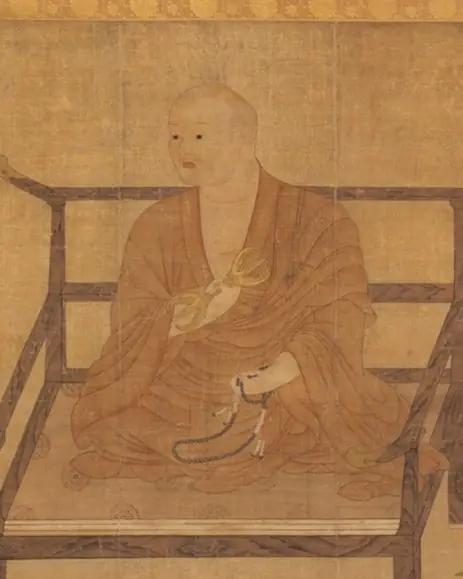
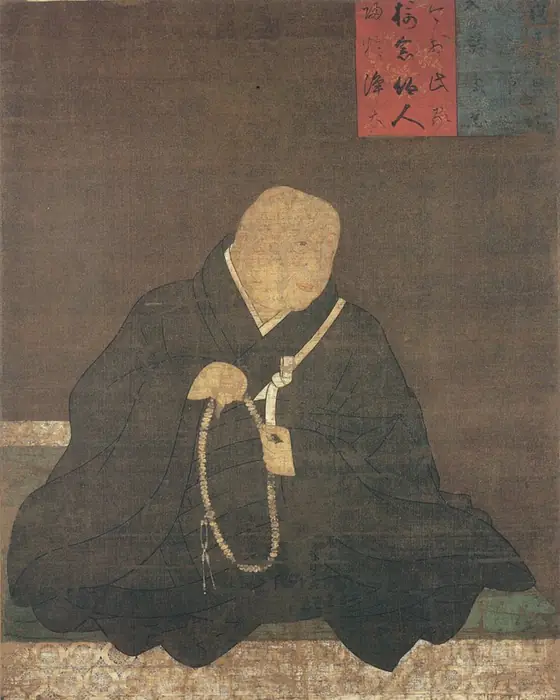
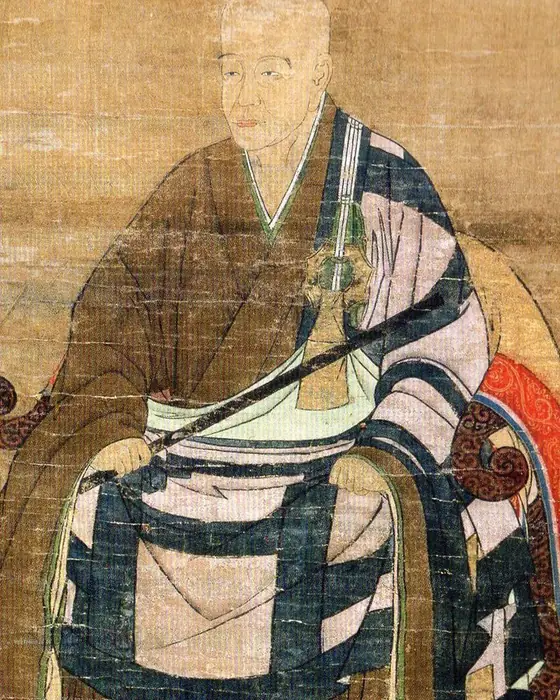
Saichō was born in 767 near Lake Biwa and ordained at Tōdai-ji in 785. Soon after, he withdrew to a hermitage on Mount Hiei, above what became the new capital, Kyoto, where he studied the works of Zhiyi.
In 804 he travelled to China with the same embassy as Kūkai. On Mount Tiantai he received the Tiantai teachings, as well as esoteric initiations, Chan and the bodhisattva precepts, and returned in 805.
In 806 the court allowed his school, Tendai, its own ordinations. He spent his last years campaigning for a Mahāyāna ordination platform on Mount Hiei, independent of the Nara establishment, based only on the bodhisattva precepts. Permission came in 822, days after his death.
The world they lived in
The capital had just moved from Nara to Heian-kyō (Kyoto), in part to escape the power of the great Nara monasteries. The court looked for new forms of Buddhism to protect the state.
Their contribution
He founded Tendai as a comprehensive school embracing Lotus Sūtra teaching, meditation, esoteric ritual and the bodhisattva precepts, and argued that all beings can attain Buddhahood.
Teachings and works
Sange gakushō shiki (Regulations for Students of the Mountain School)
Shugo kokkai shō (Essay on Protecting the Nation)
Related teachings
Their legacy
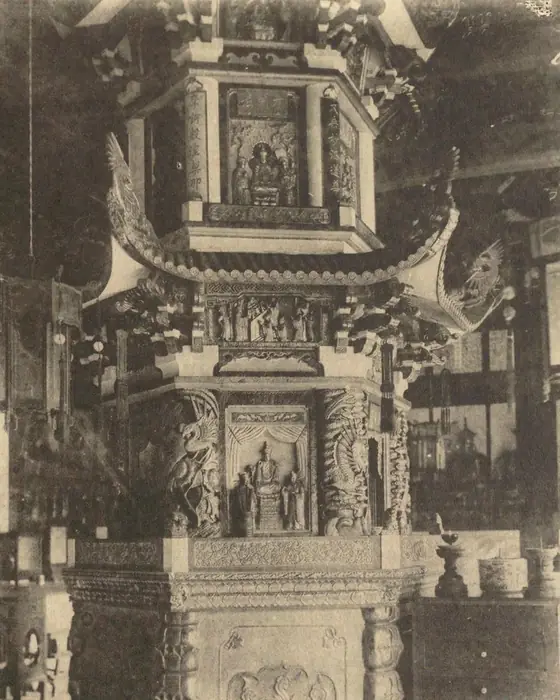
Enryaku-ji grew into a vast complex and a centre of learning and power. Hōnen, Shinran, Eisai, Dōgen and Nichiren all trained there, making Tendai the mother of medieval Japanese Buddhism.
History and tradition
What history can establish
His life is well documented, including by documents in his own hand, such as his ordination certificate and letters.
What Buddhist tradition remembers
Tradition holds that the lamp he lit in the central hall of Enryaku-ji has been kept burning ever since, as the 'inextinguishable Dharma light'.