Their story
Zhiyi was born in 538 into a family of officials in southern China. When the Liang dynasty collapsed and his family was ruined, he became a monk, at about seventeen.
He studied meditation for seven years under the master Huisi, then taught with great success in the southern capital, Jinling. In 575 he withdrew with a few disciples to Mount Tiantai in Zhejiang, to deepen his practice, and the mountain gave his school its name.
In later life he was patronised by the Sui prince Yang Guang, the future emperor, who gave him the title Zhizhe, 'the Wise One'. His lectures, recorded by his disciple Guanding, became the foundational texts of the Tiantai school. He died on the way back to Mount Tiantai in 597.
The world they lived in
China was reunited by the Sui dynasty in 589 after almost three centuries of division. Chinese Buddhists faced a huge and contradictory body of translated scripture and needed a way to make sense of it as a whole.
Their contribution
He organised the Buddha's teachings into periods and methods culminating in the Lotus Sūtra, taught the 'threefold truth' that all things are at once empty, provisionally real and the middle between these, and set out a complete path of meditation in his Great Calming and Contemplation.
Teachings and works
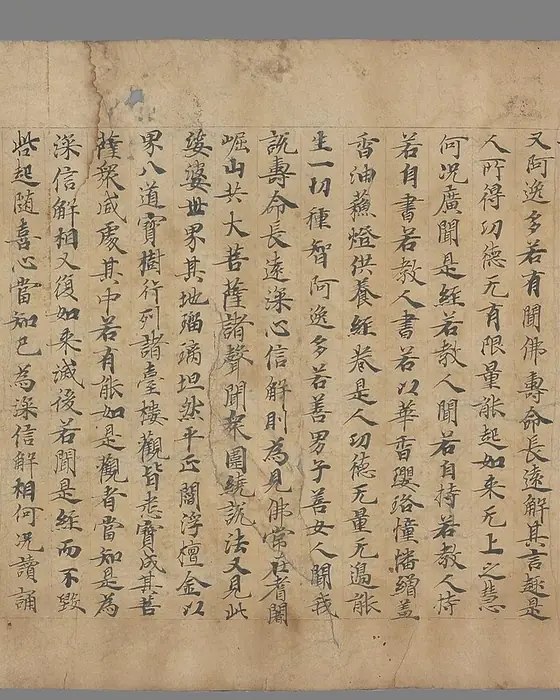
Mohe zhiguan (The Great Calming and Contemplation)
Lectures recorded by Guanding.
Fahua xuanyi (Profound Meaning of the Lotus Sūtra)
Fahua wenju (Words and Phrases of the Lotus Sūtra)
Related teachings
Their legacy
Tiantai became one of the great Chinese schools. Saichō carried it to Japan as Tendai, from which the Pure Land, Zen and Nichiren founders of the Kamakura period all emerged.
History and tradition
What history can establish
His life is well documented by his disciple Guanding and by imperial records. Scholars note that the neat scheme of 'five periods and eight teachings' was organised more fully by later Tiantai writers.
What Buddhist tradition remembers
Tiantai tradition counts him as its fourth patriarch, after Nāgārjuna, Huiwen and Huisi, but honours him as the real founder.