Their story
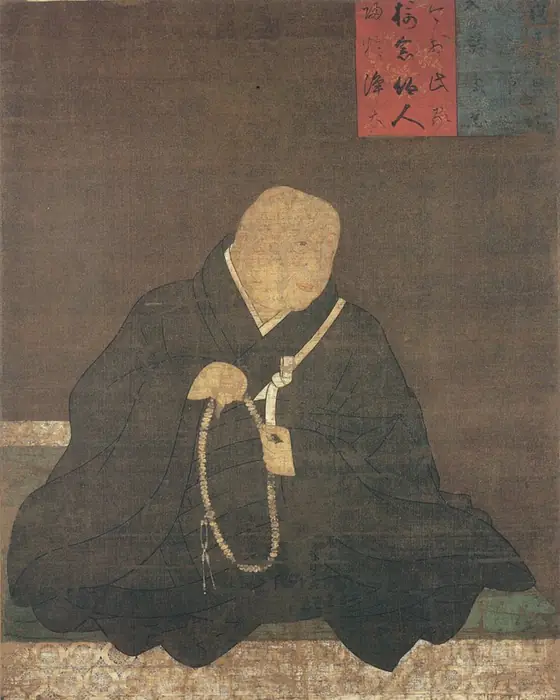
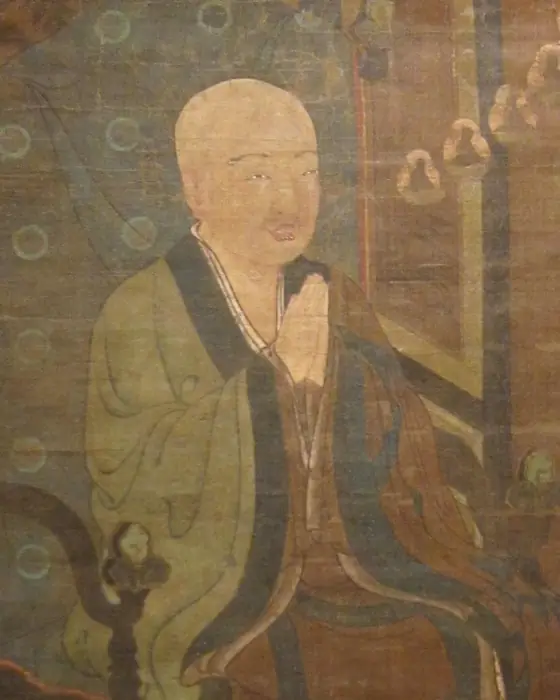
Shinran was born in 1173 into a minor aristocratic family and entered Mount Hiei as a boy, where he practised for about twenty years. In 1201, after a retreat at the Rokkakudō temple in Kyoto and a dream of the bodhisattva Kannon, he became a disciple of Hōnen.
When the court banned Hōnen's teaching in 1207, Shinran was stripped of his monastic status and exiled to Echigo. He called himself 'neither monk nor layman' and married; his wife, Eshinni, was his partner in the teaching. After his pardon he spent some twenty years teaching in the Kantō region of eastern Japan.
Around 1235 he returned to Kyoto, where he wrote and revised his works into old age. He died in 1263 at the age of ninety.
The world they lived in
Hōnen's teaching had spread widely and was persecuted by the established monasteries and the court. Rural people in the east, many of them farmers and warriors, were open to a teaching that required no learning or austerities.
Their contribution
He taught that even the nembutsu is not one's own achievement but an expression of the entrusting heart (shinjin) given by Amida, so that the 'evil person', aware of their helplessness, is the very one Amida's vow embraces.
Teachings and works
Kyōgyōshinshō (Teaching, Practice, Faith and Realisation)
His major work.
Hymns and letters
Tannishō (Lamenting the Deviations)
Sayings recorded after his death by his disciple Yuien.
Related teachings
Their legacy
His followers later organised as Jōdo Shinshū, above all through the Honganji temples revived by Rennyo in the 15th century. It remains the largest Buddhist tradition in Japan and was carried by emigrants to Hawaii and the Americas.
History and tradition
What history can establish
His life is documented by his own writings and letters, including letters by his wife Eshinni discovered in 1921, which confirmed much of his biography.
What Buddhist tradition remembers
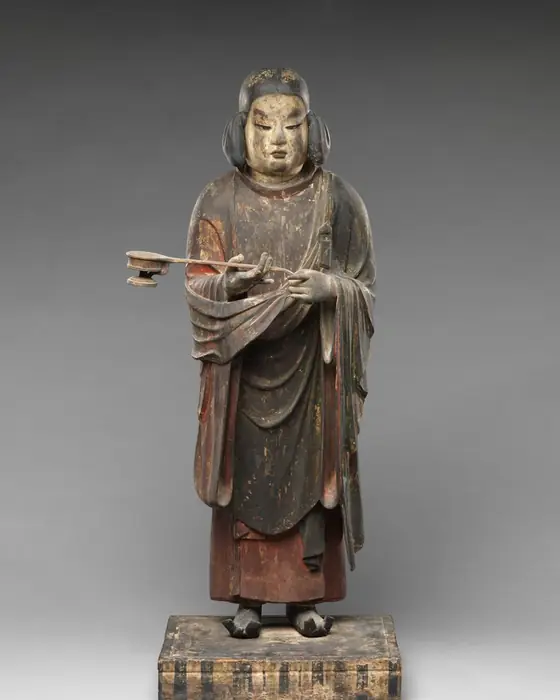
Tradition says that in his dream at the Rokkakudō, Kannon promised to take the form of a woman and be his wife, blessing his marriage.