Their story
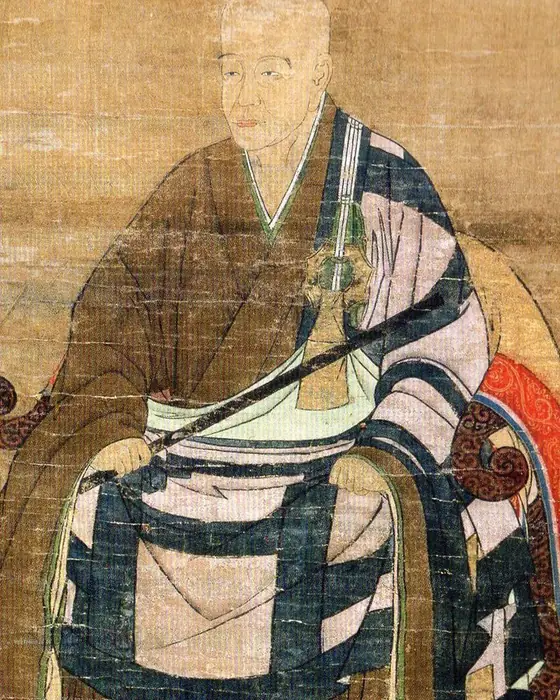
Dōgen was born in 1200 into a noble family in Kyoto and lost both parents as a child. He became a monk on Mount Hiei at thirteen but was troubled by a question: if all beings already have Buddha-nature, why must one practise?
He studied Zen at Kennin-ji under Myōzen, a disciple of Eisai, and in 1223 went with him to China. At Mount Tiantong he studied under the Caodong master Rujing and, hearing Rujing scold a sleeping monk, experienced what he called 'dropping off body and mind'. He returned in 1227.
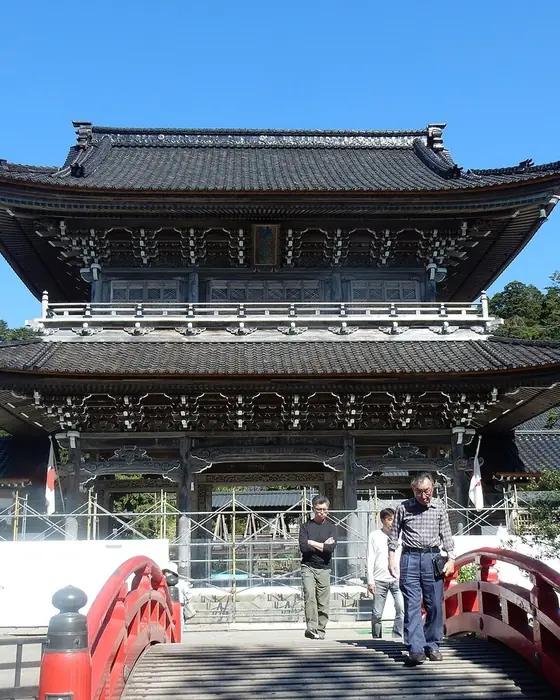
He taught near Kyoto and in 1243 moved to the remote province of Echizen, where he founded the monastery later named Eihei-ji. He died in Kyoto in 1253.
The world they lived in
Zen was newly arrived in Japan and viewed with suspicion by the Tendai establishment. Dōgen sought to establish a strict Chinese-style monastic life far from the politics of the capital.
Their contribution
He taught that seated meditation is not a means to awakening but its expression, that practice and realisation are one, and wrote with extraordinary originality on time, being and nature, in Japanese rather than Chinese.
Teachings and works
Shōbōgenzō (Treasury of the True Dharma Eye)
Collected essays.
Fukanzazengi (Universal Recommendation for Zazen)
Tenzo kyōkun (Instructions for the Cook)
Related teachings
Their legacy
Sōtō Zen, spread widely by Keizan and his successors, became one of Japan's largest schools. In the 20th century his writings were rediscovered by Japanese philosophers and then by readers worldwide, and Sōtō Zen centres spread across the West.
History and tradition
What history can establish
His life and writings are well documented, including records compiled by his disciples.
What Buddhist tradition remembers
Tradition tells that on the ship home from China he had a vision of the bodhisattva Kannon on the waves.