Their story
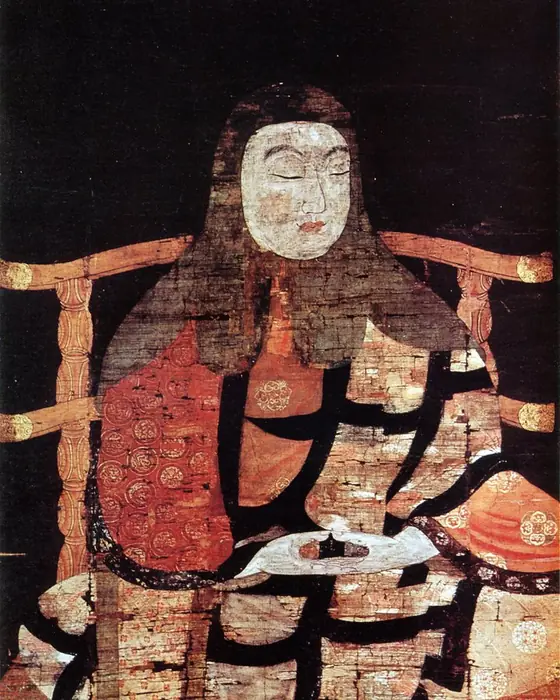
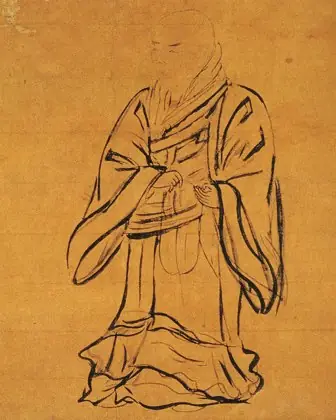
Prince Umayado, known after his death as Shōtoku, 'Sagely Virtue', was a son of the ruler Yōmei. According to Japan's first official history, the Nihon shoki, compiled in 720, he served as regent for his aunt, Empress Suiko, from 593.
The same history credits him with the Seventeen-Article Constitution of 604, which urges officials to 'sincerely revere the three treasures', the Buddha, the Dharma and the Sangha, and with sending embassies to Sui China. He is associated with the founding of the temples of Shitennō-ji and Hōryū-ji.
Tradition also credits him with commentaries on three sūtras, the Lotus, the Vimalakīrti and the Śrīmālā. He died in 622.
The world they lived in
Buddhism had reached the Yamato court from Korea in the 6th century and was championed by the powerful Soga clan, to which Shōtoku was closely related, against rivals who favoured the native kami.
Their contribution
He is remembered as the ruler who made Buddhism a pillar of the Japanese state and culture, sponsoring temples, learning and relations with the continent.
Teachings and works
The Seventeen-Article Constitution
Attributed to him in the Nihon shoki; its authorship is debated.
Sangyō gisho (Commentaries on Three Sūtras)
Traditionally his; many scholars doubt the attribution.
Related teachings
Their legacy
A devotional cult grew up around him from the 8th century, treating him as an incarnation of the bodhisattva Avalokiteśvara or of the Chinese master Huisi. Later founders, above all Shinran, revered him, and his portrait long appeared on Japanese banknotes.
History and tradition
What history can establish
Shōtoku was a real prince, but much of what is told about him comes from the Nihon shoki, written a century after his death, and some historians argue that his image as a sage regent was largely created then.
What Buddhist tradition remembers
Legend says he was born in front of a stable, spoke at birth, could listen to ten petitioners at once, and at two years old faced east and invoked the Buddha, as shown in the sculpture here.