Their story
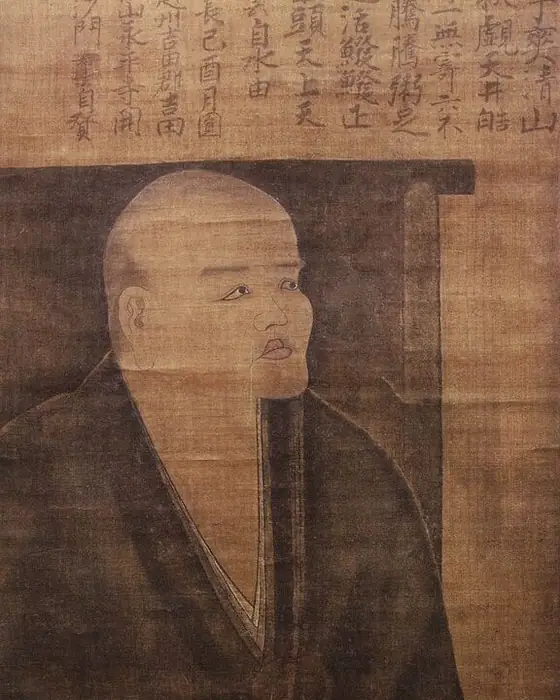
Eisai was born in 1141 and trained as a Tendai monk on Mount Hiei. He made a short visit to China in 1168.
In 1187 he went again, hoping to reach India. Unable to continue, he stayed in China, studying on Mount Tiantai under the Chan master Xu'an Huaichang of the Linji lineage, who certified his awakening. He returned in 1191.
He founded Shōfuku-ji in Hakata, wrote a defence of Zen against critics on Mount Hiei, and won the patronage of the shogunate: Jufuku-ji in Kamakura in 1200 and Kennin-ji in Kyoto in 1202. He died in 1215.
The world they lived in
The Kamakura shogunate, Japan's first warrior government, was established in 1192. Its leaders were interested in the Chan Buddhism of Song China, where it was the dominant monastic form.
Their contribution
He introduced Rinzai Zen practice and strict monastic rules while remaining within Tendai and esoteric Buddhism, and argued that Zen would protect the nation.
Teachings and works
Kōzen gokoku ron (Promoting Zen for the Protection of the Country)
1198.
Kissa yōjōki (Drinking Tea for Health)
1211; the first Japanese book on tea.
Related teachings
Their legacy
Rinzai Zen flourished under warrior patronage and shaped Japanese culture, from ink painting to gardens. Dōgen studied at Kennin-ji before going to China. Tea drinking spread from his circle.
History and tradition
What history can establish
His life and works are well documented.
What Buddhist tradition remembers
Tradition credits him with bringing tea seeds from China and planting them in Japan.