Their story
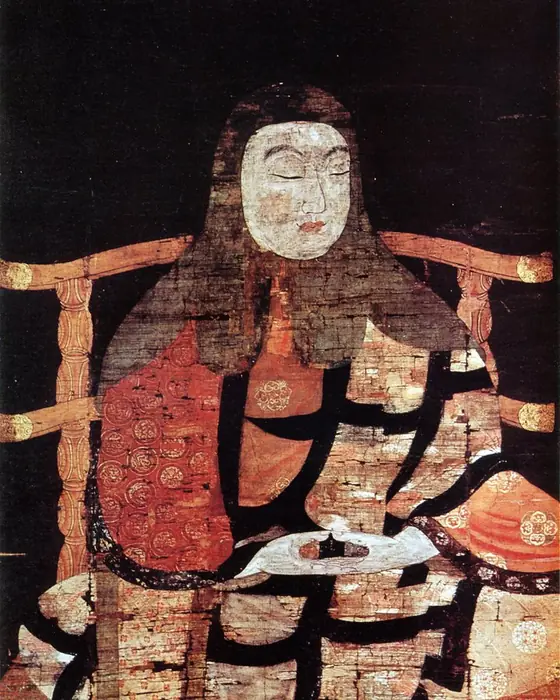
Nichiren was born in 1222 in a fishing village in Awa province, of humble birth, as he himself emphasised. He trained in Tendai, including on Mount Hiei, and became convinced that the Lotus Sūtra was the Buddha's supreme teaching.
In 1253 he proclaimed that chanting its title, Namu Myōhō Renge Kyō, was the practice for the age, and began denouncing other schools, above all Hōnen's Pure Land, as causes of the country's disasters. In 1260 he presented his Treatise on Establishing the Correct Teaching for the Peace of the Land to the shogunate, warning of foreign invasion.
He was attacked, exiled to Izu, nearly executed at Tatsunokuchi in 1271 and exiled to Sado Island, where he wrote major works. The Mongol invasions of 1274 and 1281 seemed to many to confirm his warnings. He spent his last years on Mount Minobu and died in 1282.
The world they lived in
13th-century Japan suffered earthquakes, famine and epidemics, and faced invasion by the Mongol empire. Pure Land and Zen were spreading, and the belief that the world had entered the final age of the Dharma was widespread.
Their contribution
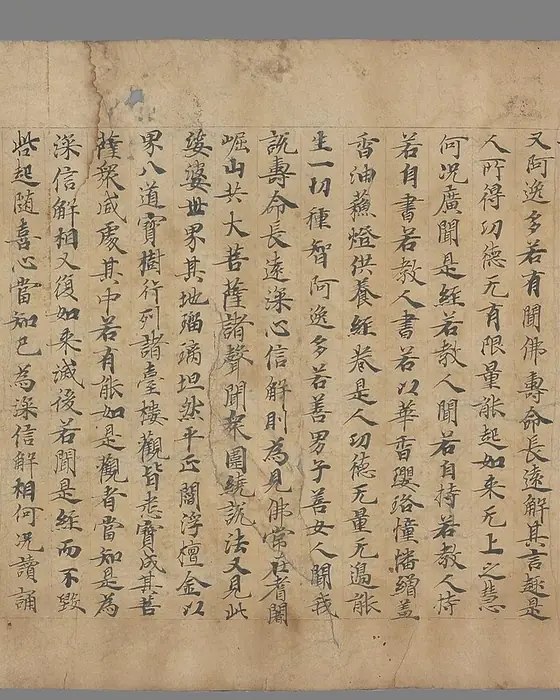
He made the Lotus Sūtra the object of an exclusive, uncompromising faith, centred on chanting its title and venerating the Gohonzon, a calligraphic maṇḍala he inscribed, and tied religious truth to the welfare of the nation.
Teachings and works
Risshō ankoku ron (On Establishing the Correct Teaching for the Peace of the Land)
1260.
Kaimoku shō (Opening of the Eyes) and Kanjin honzon shō (The Object of Worship for Contemplating the Mind)
Written in exile on Sado.
Hundreds of letters to his followers
Related teachings
Their legacy
Nichiren Buddhism includes Nichiren Shū, Nichiren Shōshū and modern lay movements such as Sōka Gakkai and Risshō Kōsei-kai, active worldwide.
History and tradition
What history can establish
His life is unusually well documented, above all through hundreds of his own letters, many in his own hand.
What Buddhist tradition remembers
Tradition says that at Tatsunokuchi, as the executioner raised his sword, a brilliant light crossed the sky and the soldiers fled in terror.