Their story
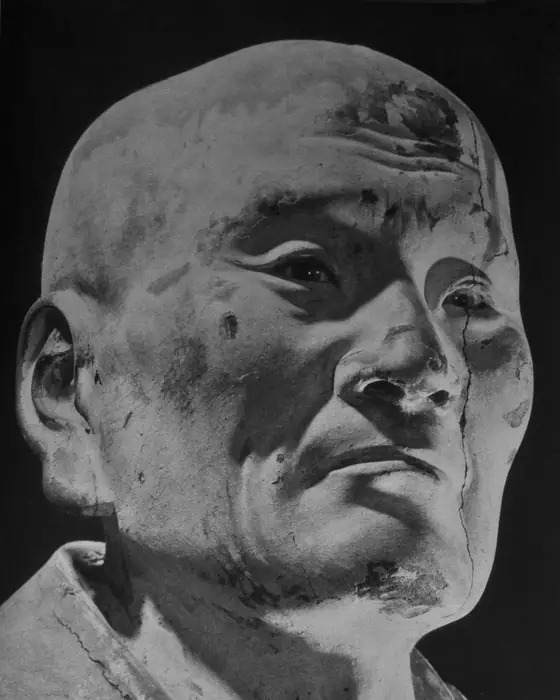
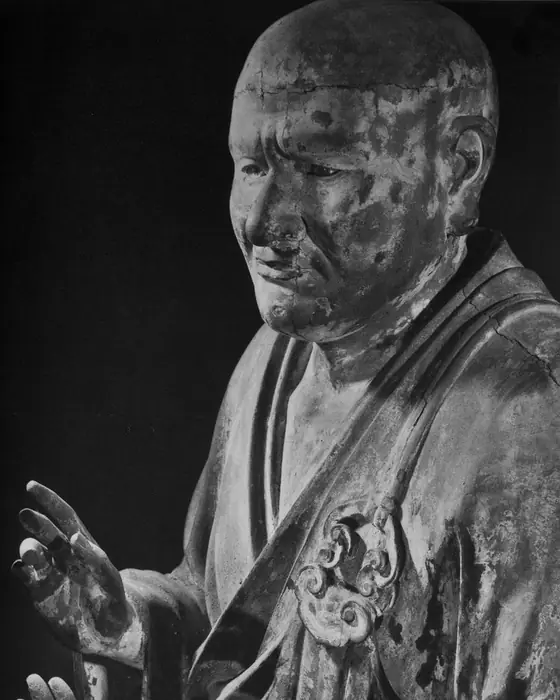
Xuanzang was born in 602 near Luoyang and became a monk as a youth. Troubled by contradictions between the Chinese translations of Yogācāra texts, he resolved to study them at their source.
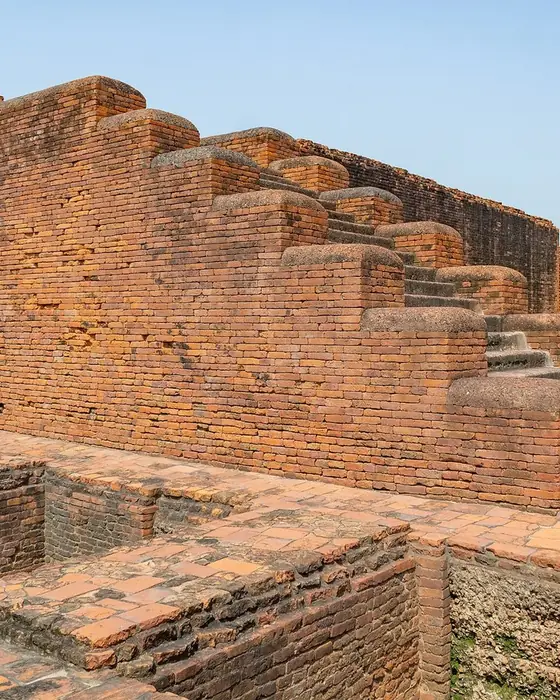
In 629, defying an imperial ban on travel, he left Chang'an and crossed the Gobi desert alone. The king of Gaochang (Turfan) supported his onward journey through Central Asia and over the Hindu Kush into India. He studied for about five years at Nālandā under the aged master Śīlabhadra, travelled the length of India, and was honoured at the court of King Harṣa.
He returned to Chang'an in 645 with 657 texts, relics and images, and was welcomed by Emperor Taizong. He spent his remaining nineteen years translating, with a large team, 75 works in more than 1,300 fascicles. He died in 664.
The world they lived in
The Tang dynasty was building an empire across Central Asia, and Chang'an was among the largest cities in the world. In India, Nālandā was at the height of its fame, and the Gupta age had given way to kingdoms such as Harṣa's.
Their contribution
He gave Chinese Buddhism precise translations of the Yogācāra and Abhidharma traditions, including the huge Perfection of Wisdom in 600 fascicles, and compiled the Cheng weishi lun, the basis of the Faxiang school. His Record of the Western Regions describes 138 countries.
Teachings and works
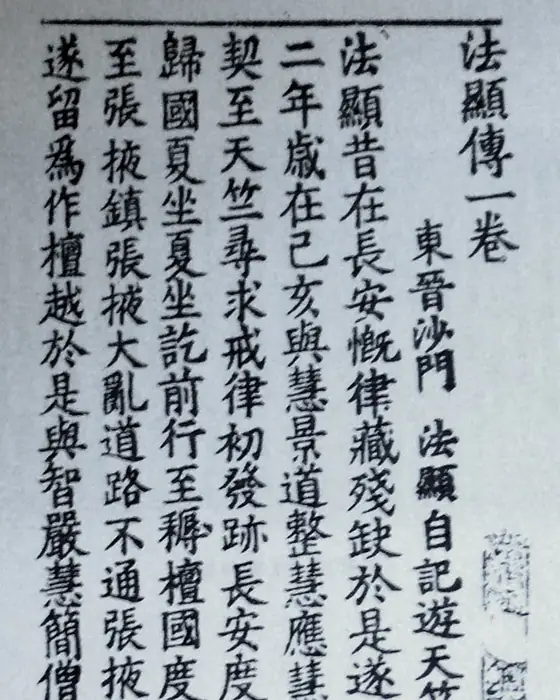
Da Tang Xiyu ji (The Great Tang Record of the Western Regions)
Written with his disciple Bianji, 646.
Cheng weishi lun (Demonstration of Consciousness-only)
A compilation of Indian commentaries on Vasubandhu's Thirty Verses.
Translation of the Heart Sūtra
The version chanted across East Asia; some scholars think the text itself was first composed in China.
Related teachings
Their legacy
His translations and his school of 'Consciousness-only' shaped East Asian Buddhist scholarship, and archaeologists in India have used his descriptions to locate ancient sites. His journey inspired the 16th-century novel Journey to the West, in which he travels with the Monkey King.
History and tradition
What history can establish
Unusually for his time, his life is fully documented: by his own record, by a biography written by his disciples, and by court records.
What Buddhist tradition remembers
Popular tradition, above all Journey to the West, turned his journey into an adventure among demons and immortals, with Sun Wukong the Monkey King as his protector.