Their story
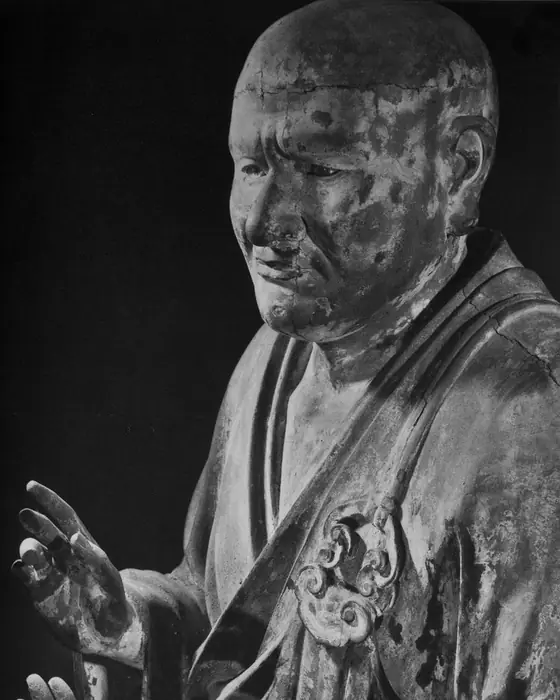
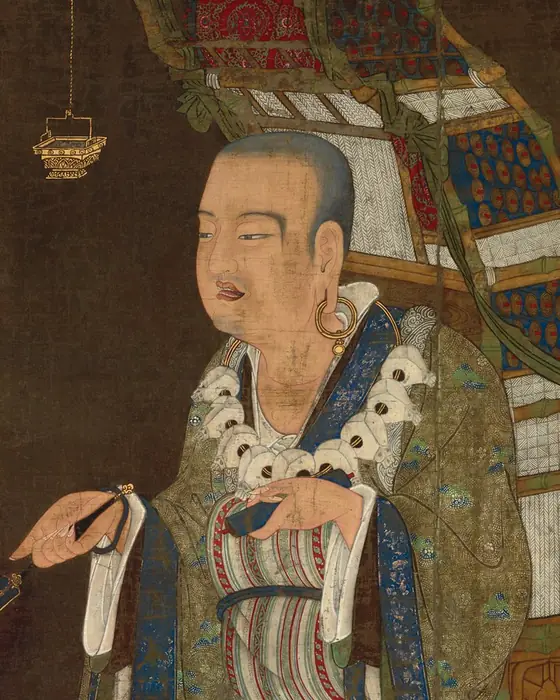
Tradition holds that Asaṅga was born in Puruṣapura in Gandhāra, the eldest of three brothers who all became monks; the second was Vasubandhu. Most scholars place him in the 4th century CE.
According to later biographies, he meditated for years on the future Buddha Maitreya without result and, in despair, gave up. On his way down the mountain he met a dying dog covered in maggots and, moved by compassion, bent to remove them with his tongue. The dog vanished and Maitreya appeared, explaining that Asaṅga's own obscurations had kept him from seeing him.
Tradition says Maitreya then taught him in the Tuṣita heaven, and Asaṅga brought back the treatises known as the Five Works of Maitreya. He himself wrote systematic summaries of the Mahāyāna, and is said to have persuaded his brother Vasubandhu to embrace it.
The world they lived in
By the 4th century, Mahāyāna monks had absorbed Nāgārjuna's teaching of emptiness but also practised intensive meditation that raised questions about the mind itself: how experience arises, how karma is carried from life to life, how the mind is purified. Yogācāra answered these questions.
Their contribution
He systematised the teaching that what we experience as an external world is constructed by consciousness, introduced the 'storehouse consciousness' that carries the seeds of past actions, and laid out the stages of the bodhisattva path in encyclopedic detail.
Teachings and works
Mahāyānasaṃgraha (Summary of the Great Vehicle)
Generally accepted as his.
Abhidharmasamuccaya (Compendium of Abhidharma)
Generally accepted as his.
Yogācārabhūmi (Stages of Yoga Practice)
An enormous compilation. Tibetan tradition credits it to Asaṅga, Chinese tradition to Maitreya; scholars see it as the work of many hands.
The Five Works of Maitreya
Traditionally revealed to him by Maitreya. Some scholars think 'Maitreya' was a human teacher; others think Asaṅga wrote some of these works himself.
Related teachings
Their legacy
Yogācāra shaped Buddhist thought in India for centuries and was carried to China by Xuanzang, where it became the Faxiang school and, in Japan, the Hossō school centred on Kōfuku-ji. In Tibet his works remain core texts of monastic education.
History and tradition
What history can establish
His dates and life are uncertain. The traditional attribution of works is complicated: which texts Asaṅga himself wrote, and who 'Maitreya' was, are among the long-running debates of Buddhist studies.
What Buddhist tradition remembers
Tibetan tradition makes the story of the dog a central teaching on compassion, and pairs Asaṅga with Nāgārjuna as the two 'Great Chariots' who opened the two main paths of Mahāyāna thought.