Their story
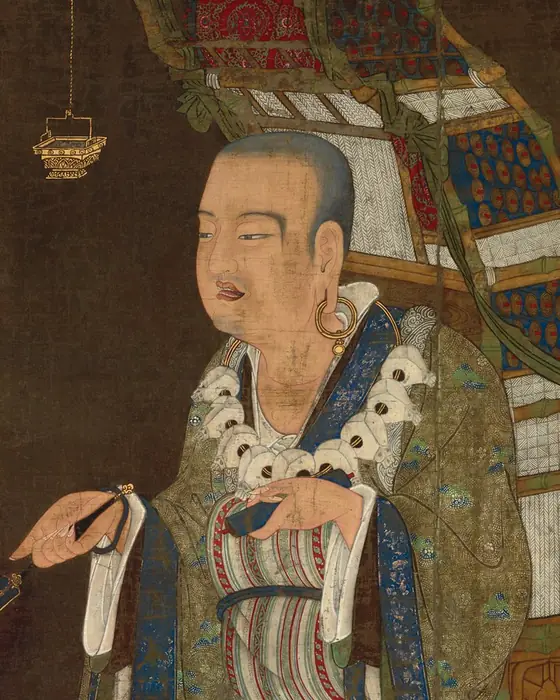
Faxian was a Chinese monk who, around the age of sixty, found that the rules of monastic discipline available in Chinese were incomplete. In 399, as he tells it himself, he set out from Chang'an with a few companions to find them in India.
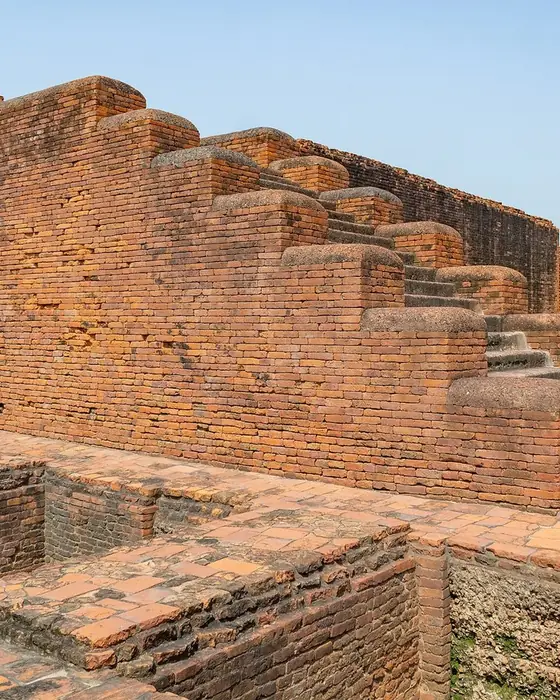
They crossed the deserts and the Pamir mountains into what is now Pakistan and India, visiting the holy places of the Buddha's life. At Pāṭaliputra he spent three years learning Sanskrit and copying texts; then two years in Sri Lanka, at the Abhayagiri monastery. Several of his companions died or stayed behind.
He returned by sea, surviving storms and a shipwreck by way of Southeast Asia, and landed on the coast of Shandong around 412. In Jiankang he translated the texts he had brought, with the Indian monk Buddhabhadra, and wrote the record of his travels.
The world they lived in
Chinese Buddhism was growing fast but depended on texts brought by foreign monks. A few Chinese monks resolved to go to the source themselves, braving routes that killed many travellers.
Their contribution
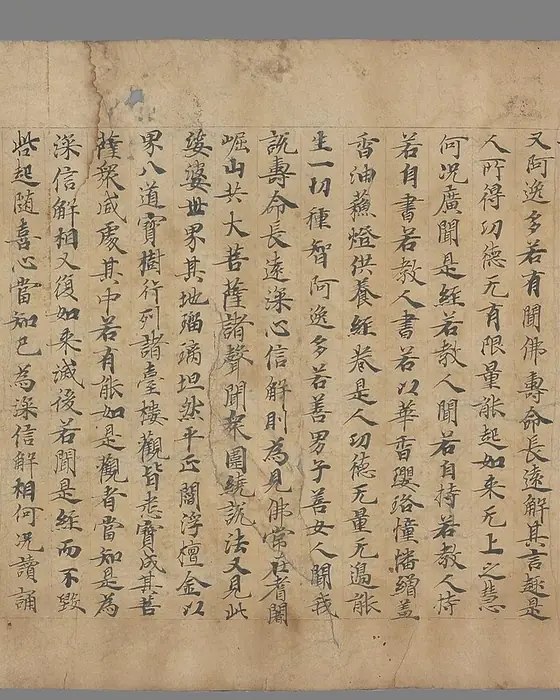
He brought back and translated monastic codes and sūtras, including the Vinaya of the Mahāsāṃghika school and a version of the Mahāparinirvāṇa Sūtra, and left a precious record of Buddhism in India and Sri Lanka around 400 CE.
Teachings and works
Foguo ji (Record of Buddhist Kingdoms)
His own account of the journey.
Mohesengqi lü (Mahāsāṃghika Vinaya)
Translated with Buddhabhadra.
Related teachings
Their legacy
His example inspired later pilgrims, including Xuanzang and Yijing, and his descriptions remain a key source for historians of Gupta India and early Sri Lanka.
History and tradition
What history can establish
His record is a first-hand account, and his journey is well documented. His birth and death dates are approximate.
What Buddhist tradition remembers
Chinese biographies add that on Vulture Peak, where the Buddha taught, he recited sūtras alone at night while lions gathered around him.