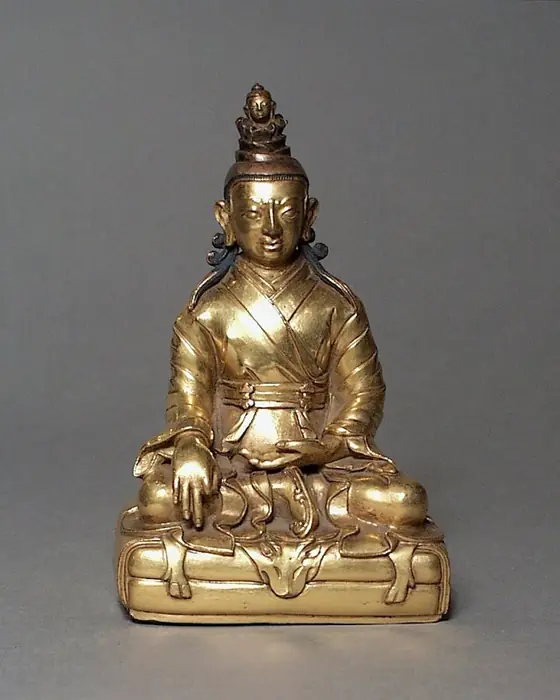
Their story
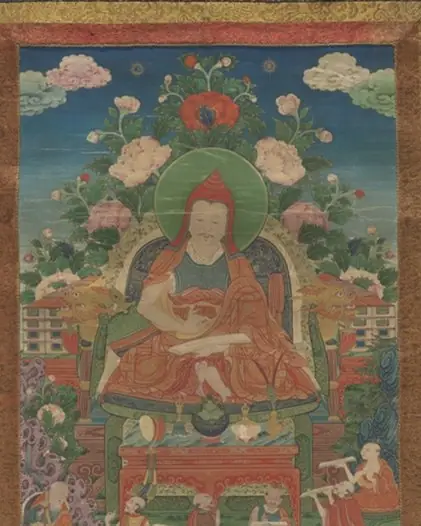
Trisong Detsen was born in 742 and became emperor in 755 or 756 as a boy, when powerful ministers who opposed Buddhism controlled the court. Under his rule the Tibetan empire reached the height of its power, even briefly occupying the Tang capital, Chang'an, in 763.
According to the Testament of Ba, an early account of the coming of Buddhism, he invited the Indian abbot Śāntarakṣita and, when opposition arose, the tantric master Padmasambhava. The first Buddhist monastery, Samye, was consecrated around 779, and the first Tibetans were ordained there as monks.
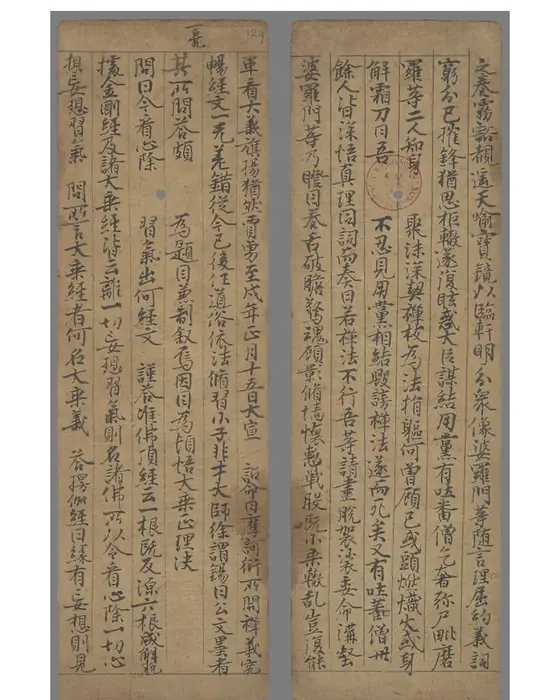
He declared Buddhism the religion of the state in an edict inscribed on a stone pillar at Samye, supported a great programme of translation from Sanskrit, and, according to Tibetan histories, presided over the debates between Indian and Chinese Buddhist teachers. He is thought to have died around 800.
The world they lived in
Tibet was an empire at war with Tang China and in contact with India, Nepal and Central Asia. Buddhism offered a sophisticated literate culture, but noble clans who followed older religious practices resisted it.
Their contribution
He created the institutions of Tibetan Buddhism: a monastery, an ordained sangha, royal endowments and a state translation effort that set Tibetan standards for rendering Sanskrit texts.
Teachings and works
The Samye pillar inscription
His edict establishing Buddhism, still standing at Samye.
Related teachings
Their legacy
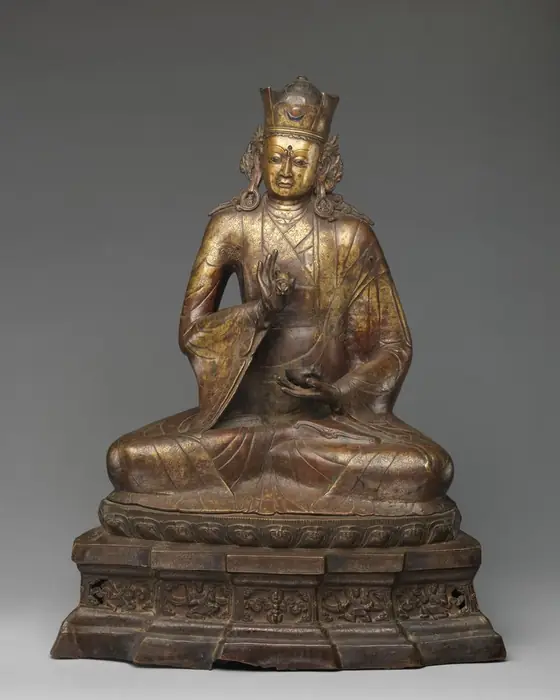
Tibetans remember him with Śāntarakṣita and Padmasambhava as the three founders of Tibetan Buddhism: the king, the abbot and the master. Tradition regards him as an emanation of the bodhisattva of wisdom, Mañjuśrī.
History and tradition
What history can establish
His reign is documented by inscriptions, including the Samye pillar and a bronze bell, by the Old Tibetan Annals and by Chinese records. The Testament of Ba is early but was reworked over later centuries.
What Buddhist tradition remembers
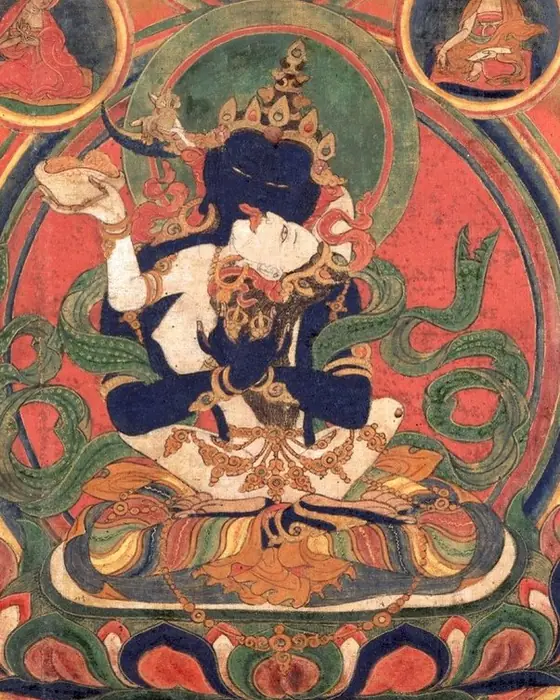
Later Nyingma histories make him a devoted disciple of Padmasambhava, to whom he offered his queen, Yeshe Tsogyal.