Their story
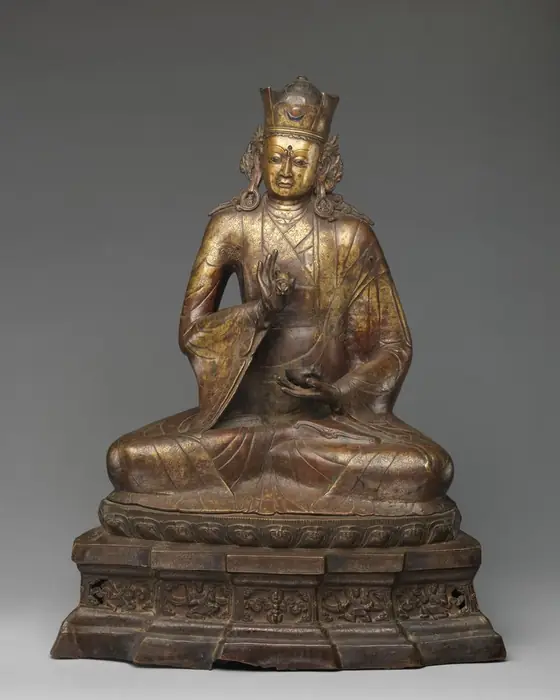
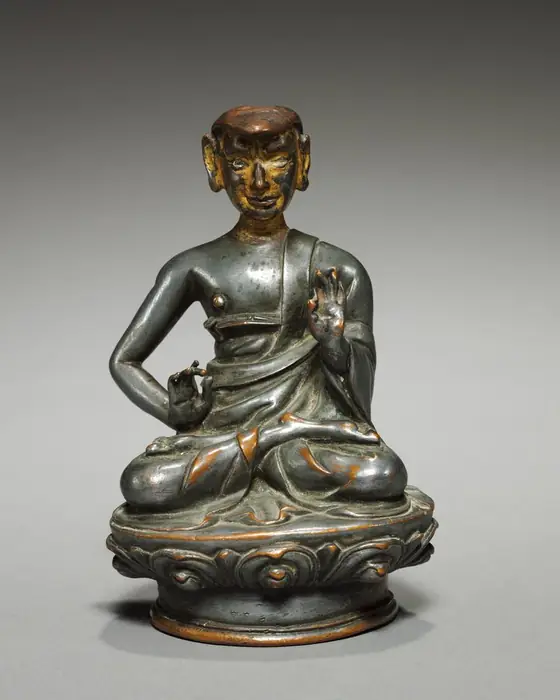
Śāntarakṣita was a senior scholar-monk of Nālandā in the 8th century. His great Tattvasaṃgraha, a 'Compendium of Reality', surveyed and refuted the views of every major Indian school, Buddhist and non-Buddhist.
Tibetan histories tell that King Trisong Detsen invited him to Tibet. His first visit met opposition at court and from natural disasters that his opponents blamed on the local spirits, and he advised the king to invite the tantric master Padmasambhava to subdue them.
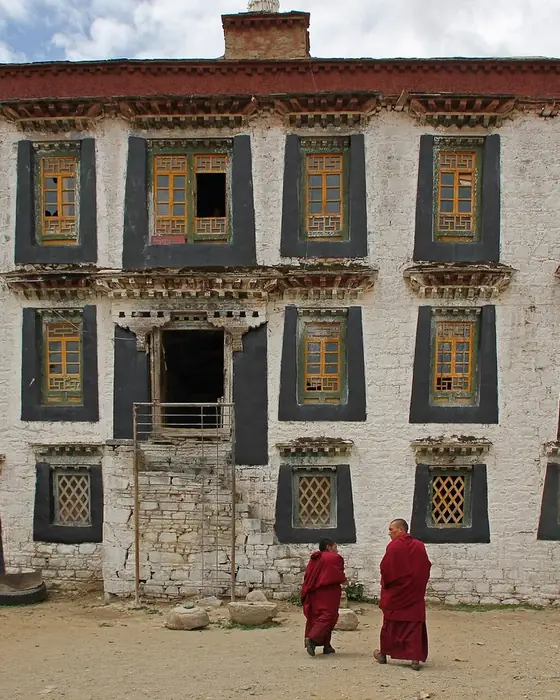
Returning to Tibet, he became the first abbot of Samye, the first Buddhist monastery, founded around 779, and ordained the first Tibetans as monks. He died in Tibet, having urged the king to invite his student Kamalaśīla should disputes arise.
The world they lived in
The Tibetan empire was at the height of its power, rivalling Tang China. Its rulers were drawn to Buddhism, but powerful noble families and followers of older religious practices resisted.
Their contribution
Philosophically, he combined Madhyamaka with Yogācāra and Dharmakīrti's logic, holding that conventional reality is mind-only while ultimately nothing has intrinsic nature. Historically, he gave Tibet its monastic ordination lineage and a model of scholarly Buddhism based on Indian learning.
Teachings and works
Tattvasaṃgraha (Compendium of Reality)
With a commentary by Kamalaśīla.
Madhyamakālaṃkāra (Ornament of the Middle Way)
His synthesis of Madhyamaka and Yogācāra.
Related teachings
Their legacy
Tibetans remember the abbot Śāntarakṣita, the master Padmasambhava and the king Trisong Detsen as the three founders of Buddhism in Tibet. His ordination lineage, carried on after the persecutions of the 9th century, underlies Tibetan monastic ordination to this day.
History and tradition
What history can establish
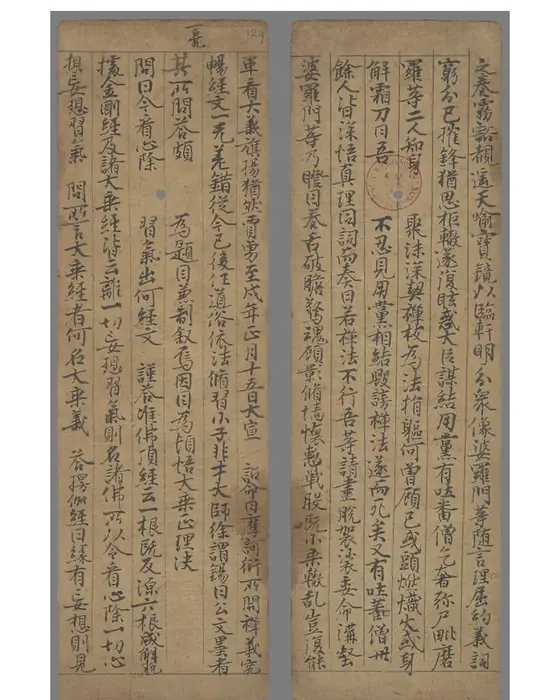
His philosophical works survive and are securely his. His role in Tibet is recorded in early Tibetan histories such as the Testament of Ba, though these were edited over later centuries.
What Buddhist tradition remembers
Tradition says he died in Tibet after being kicked by a horse.