Their story
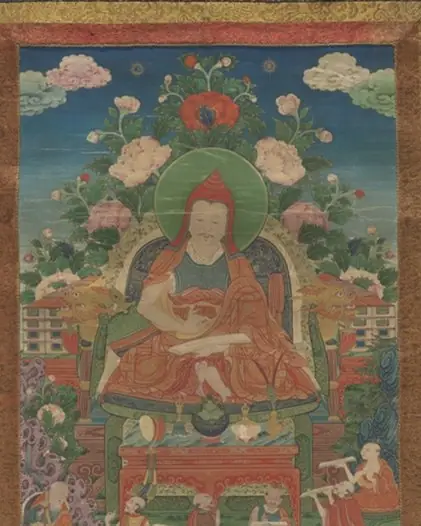
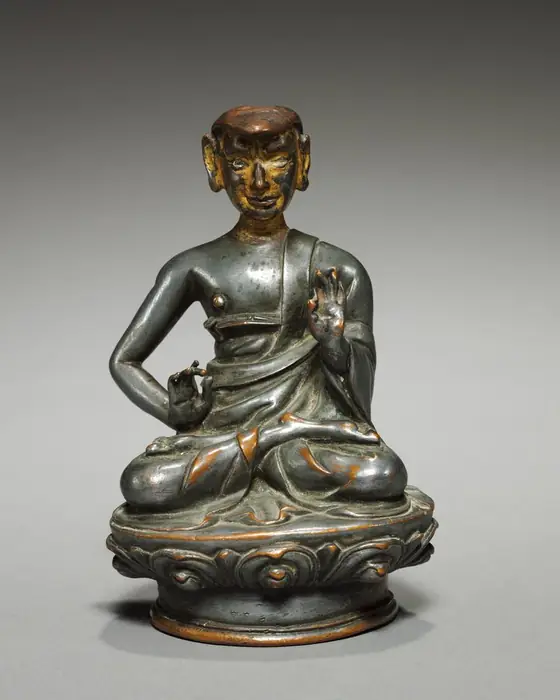
Kamalaśīla was a student of Śāntarakṣita and wrote a long commentary on his teacher's Compendium of Reality, as well as independent works on Madhyamaka.
Tibetan histories tell that after Śāntarakṣita's death, a conflict arose in Tibet between followers of Indian teachers, who taught a gradual path of study, ethics and meditation, and followers of the Chinese Chan master Moheyan, who taught sudden awakening through non-conceptual meditation. King Trisong Detsen invited Kamalaśīla to Tibet.
In the Tibetan account, Kamalaśīla debated Moheyan at Samye in the early 790s and won, and the king decreed that Tibetans should follow the Indian path. He is said to have written his three Bhāvanākramas, 'Stages of Meditation', in Tibet.
The world they lived in
Tibet stood between India and China, drawing Buddhism from both. Chinese Chan was flourishing and had teachers at the Tibetan court and in Dunhuang, then under Tibetan rule.
Their contribution
His Stages of Meditation lay out how calm abiding (śamatha) and insight (vipaśyanā) are cultivated step by step, uniting reasoned analysis with meditation, a model that became central to Tibetan practice.
Teachings and works
Bhāvanākrama (Stages of Meditation), in three parts
Tattvasaṃgrahapañjikā
Commentary on Śāntarakṣita's Compendium of Reality.
Madhyamakāloka (Illumination of the Middle Way)
Related teachings
Their legacy
Tibetan teachers from Atiśa to Tsongkhapa drew on his Stages of Meditation, and the 'Samye debate' became a founding story of Tibetan Buddhist identity.
History and tradition
What history can establish
Chinese sources from Dunhuang, such as the record shown here, tell the story differently, claiming victory for Moheyan, and many historians think the 'debate' was a series of exchanges over several years rather than a single contest. His works are securely his.
What Buddhist tradition remembers
Tibetan tradition says he was later murdered by assassins sent by supporters of Moheyan.