Their story
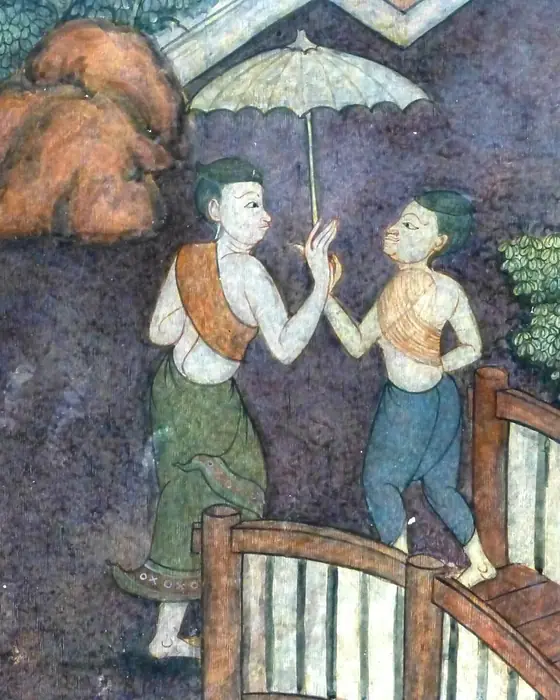
Buddhist tradition remembers Mahāpajāpatī as the sister of the Buddha's mother, Māyā, and a wife of his father, Suddhodana. When Māyā died a week after the birth, she raised the boy as her own.
After Suddhodana's death, the texts say, she asked the Buddha to allow women to go forth as renunciants. He refused three times. She and a large group of Śākya women cut off their hair, put on robes and followed him on foot to Vesālī. There Ānanda took up their cause, and the Buddha agreed, on condition that nuns accept eight special rules that placed them under the community of monks.
In the tradition's account she became the first bhikkhunī, a fully ordained nun, and a leader of the nuns' community. The Therīgāthā preserves verses attributed to her, giving thanks for her release, and later texts describe her death, among her nuns, shortly before the Buddha's own.
The world they lived in
Women in the Buddha's society had few roles outside the household. Jain communities already admitted women ascetics, but for most women religious life meant family ritual. A women's monastic order gave some of them an independent spiritual path, and a community of their own.
Their contribution
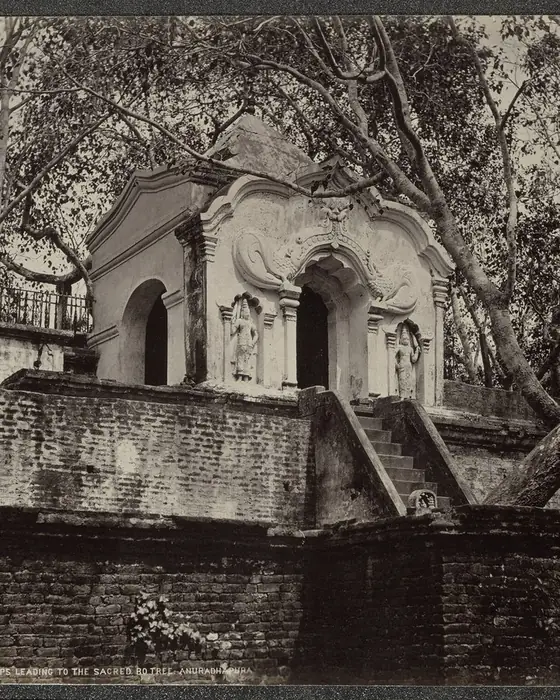
Through her, according to tradition, the bhikkhunī sangha began: the order of fully ordained Buddhist nuns. It flourished in India, was carried to Sri Lanka and from there to China, where it continues today.
Teachings and works
Verses in the Therīgāthā (Thig 6.6)
Attributed to her in the collection of the early nuns' poems.
Related teachings
Their legacy
The story of her ordination, with the eight rules and the Buddha's initial refusal, has been debated for centuries. It remains at the centre of modern discussions about full ordination for women in Theravāda and Tibetan Buddhism.
History and tradition
What history can establish
The ordination story survives in the monastic codes of several early schools, so it is old. Scholars disagree about how much of it, above all the eight rules and the warning that admitting women would shorten the life of the teaching, reflects later editing. Nothing about her is recorded outside Buddhist texts.
What Buddhist tradition remembers
Later texts such as the Apadāna give her a long history of past lives and describe her final passing, surrounded by five hundred nuns, as an occasion of great wonder.