Their story
Early Buddhist texts describe Mahākassapa as the son of a wealthy brahmin family of Magadha. Tradition holds that he and his wife, Bhaddā Kāpilānī, lived together in celibacy and left home together, and that she later became a nun.
He became known for strict practice: living in the forest, wearing robes of cast-off rags, eating only what he received on almsround. In one discourse he recalls that the Buddha exchanged robes with him, a sign of special regard.
When the Buddha died, Kassapa was travelling. On the road he met a monk who rejoiced that they were now free of the Buddha's rules. Soon afterwards, tradition says, he called five hundred awakened monks together at Rājagaha to recite the teaching and the discipline: the First Council.
The world they lived in
The Buddha named no successor. Without a leader, the community had to agree what the teaching was and how its rule should be kept. Kassapa's seniority and austere reputation gave him authority in that uncertain moment.
Their contribution
According to tradition he presided over the First Council, where Ānanda recited the discourses and Upāli the discipline, fixing the core of what became the Buddhist canons.
Teachings and works
The Kassapa Saṃyutta (SN 16)
A group of discourses in the Pāli Canon about him and his practice.
Related teachings
Their legacy
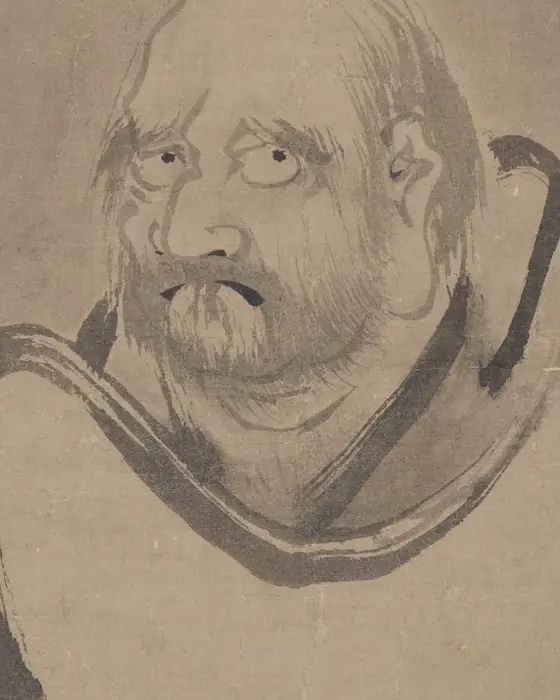
Forest traditions in Southeast Asia look to him as the model of austere practice. In Chan and Zen, a later story tells that when the Buddha silently held up a flower, only Kassapa smiled, receiving the wordless transmission of the Dharma. He is counted as the first Indian ancestor of the lineage.
History and tradition
What history can establish
Known only from Buddhist texts. Historians generally doubt that the First Council happened just as the traditions describe, though the tradition of a council is old and shared by many early schools.
What Buddhist tradition remembers
The flower sermon story is first found in Chinese Chan sources of the Song dynasty, more than 1,500 years after the Buddha, and was important in establishing Chan's claim to a special transmission outside the scriptures. Other traditions hold that Kassapa still waits in meditation inside a mountain for the coming of the future Buddha, Maitreya.