Their story
According to the Sri Lankan chronicles, Saṅghamittā was a daughter of Ashoka and a sister of Mahinda, ordained as a nun in India.
When Queen Anulā and many women of the Sri Lankan court wished to become nuns after hearing Mahinda's teaching, only nuns could ordain them. The chronicles tell that Ashoka sent Saṅghamittā with a group of nuns and with a branch of the tree under which the Buddha had awakened, carried by sea in a golden vessel.
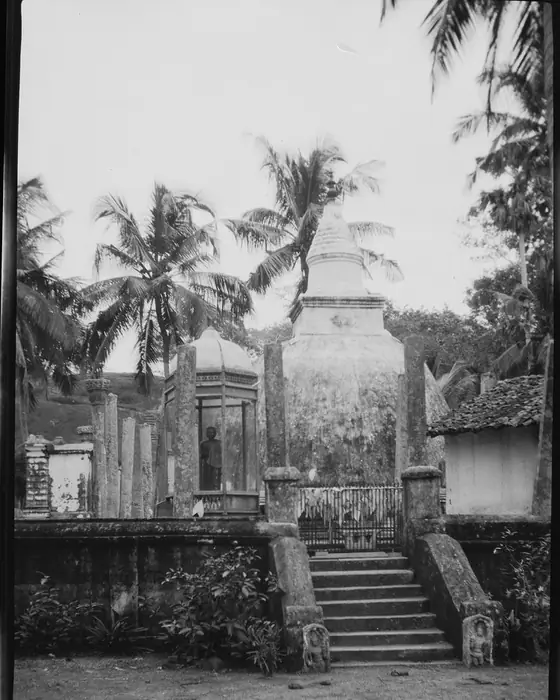
King Devānampiya Tissa planted the branch at Anuradhapura, and Saṅghamittā ordained the queen and her companions, founding the order of Sri Lankan nuns. Tradition says she spent the rest of her life on the island.
The world they lived in
The chronicles present the arrival of the Bodhi tree as a royal gift between allied kings, binding the new Buddhist kingdom of Anuradhapura to the land of the Buddha.
Their contribution
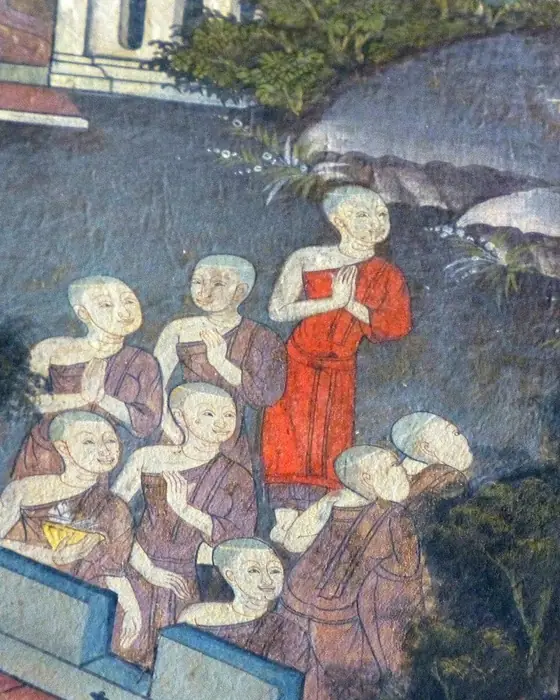
The nuns' lineage she is credited with founding flourished in Sri Lanka for over a thousand years. Chinese records tell that in the 430s Sri Lankan nuns travelled to China and helped establish the full ordination of nuns there, a lineage that continues in East Asia today.
Their legacy
Unduvap, the December full moon, is observed in Sri Lanka as Saṅghamittā Day. The Sri Lankan nuns' order died out around the 11th century, and its revival through new ordinations from the 1990s onwards looks back to her.
History and tradition
What history can establish
Known from the chronicles, written down centuries later; no inscription of Ashoka names her. The Jaya Sri Maha Bodhi at Anuradhapura is traditionally dated to her mission, which would make it the oldest tree with a recorded planting date, though that record is the chronicles' own.
What Buddhist tradition remembers
The chronicles describe the branch rooting itself miraculously and sending out saplings that were planted across the island.