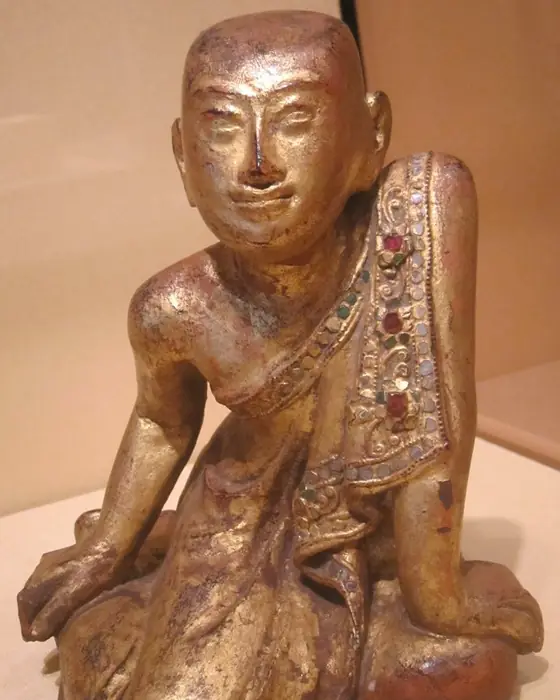
Their story
Buddhist tradition remembers Ānanda as a cousin of the Buddha who joined the community with other young Śākyas. In the Buddha's later years he became his personal attendant, a role the texts say he held for about twenty-five years.
The discourses show him as gentle and devoted, with an extraordinary memory. According to the monastic code, it was Ānanda who pleaded with the Buddha to admit women as nuns. In the account of the Buddha's final journey, it is Ānanda who stays at his side, weeps as his death approaches, and receives his last instructions.
Tradition holds that he had not yet reached full awakening when the Buddha died, and that he attained it on the night before the First Council, just in time to take his place among the elders and recite the discourses.
The world they lived in
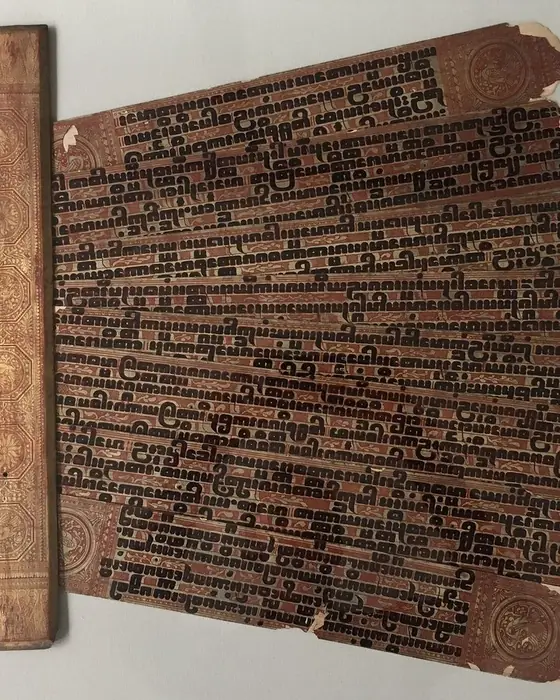
The early community relied on memory: there were no written texts. Monks specialised in memorising parts of the teaching, and the reliability of a reciter mattered enormously. Ānanda's reputation as the disciple who had heard the most gave the collected discourses their authority.
Their contribution
In the traditional account of the First Council, Ānanda recited the discourses, the suttas, which became the core of the discourse collections of the early schools. His advocacy for women's ordination is remembered as decisive.
Teachings and works
The Sutta Piṭaka (as reciter)
Tradition credits him with reciting the Buddha's discourses at the First Council.
Verses in the Theragāthā (Thag 17.3)
Related teachings
Their legacy
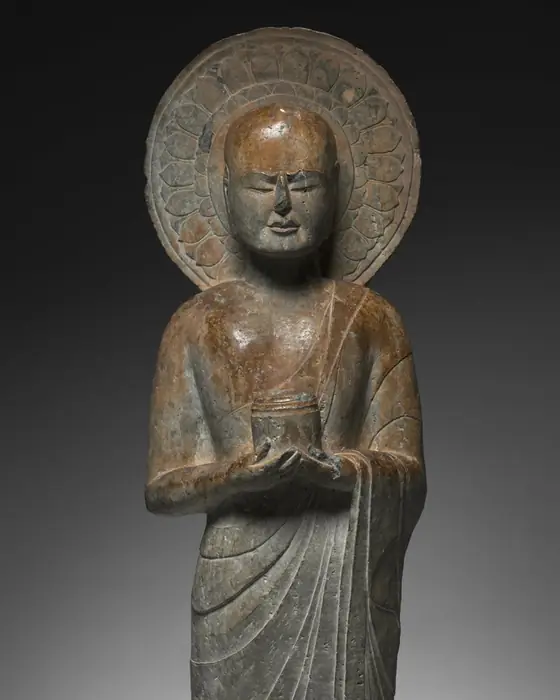
Nuns in several traditions honoured Ānanda as the champion of their order. In East Asia he is the second ancestor of the Chan lineage after Mahākassapa, and he stands at the Buddha's side in countless temple images, young beside the aged Kassapa.
History and tradition
What history can establish
Known only from Buddhist texts compiled after his lifetime. The First Council itself is known only from these traditions, and historians debate what really took place there.
What Buddhist tradition remembers
Some accounts say the elders at the First Council rebuked Ānanda for several faults, among them supporting women's ordination. Later traditions say he lived to a great age and died in the middle of a river, so that the kingdoms on either bank could share his relics.