Their story
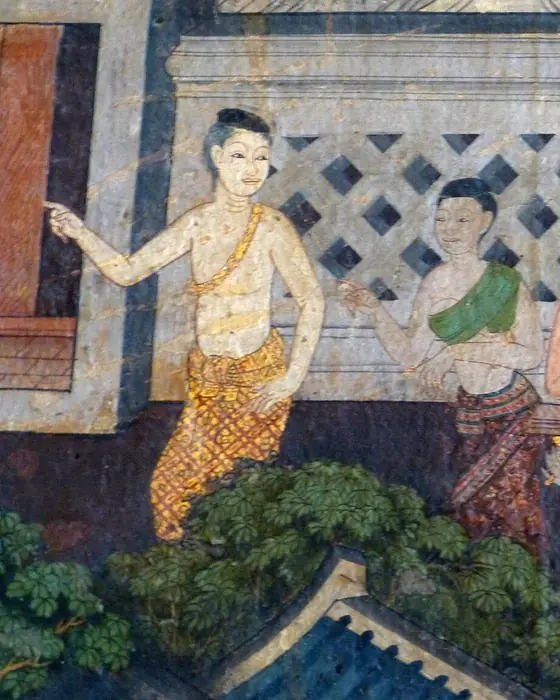
Buddhist tradition remembers Kisā Gotamī, 'Gotamī the thin', as a young woman of a poor family in Sāvatthī who married into a wealthy household. When her only son died as a small child, she carried his body from house to house, begging for medicine to bring him back.
According to the commentaries, someone sent her to the Buddha, who said he could help if she brought him a mustard seed from a house where no one had ever died. She went from door to door. Everyone would give her a seed, but every household had known death. By evening she understood that death comes to all, laid her son to rest, and asked to become a nun.
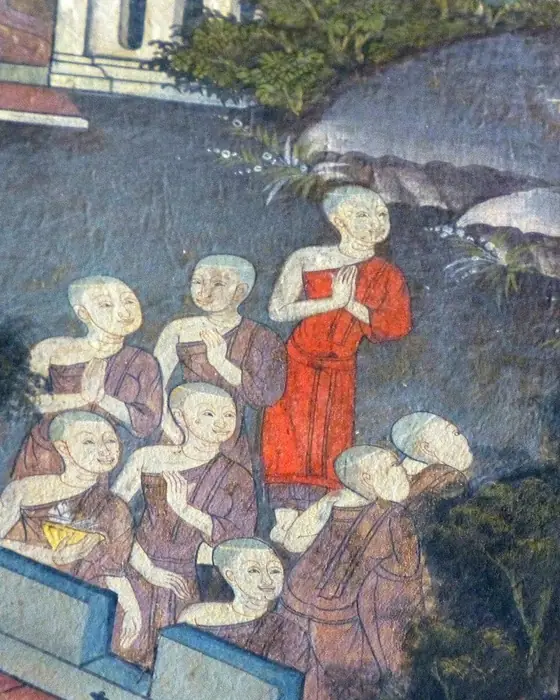
She became a nun and, in the tradition's account, attained awakening. The Buddha named her foremost among the nuns in wearing rough robes.
The world they lived in
In a society where a woman's security often depended on bearing sons, the loss of a child could also mean the loss of her place in her husband's family. Her story speaks to that double grief.
Their contribution
Her own verses in the Therīgāthā speak of the sorrows of women's lives and of finding peace. The mustard-seed story made her a teacher of generations who never read them.
Teachings and works
Verses in the Therīgāthā (Thig 10.1)
Related teachings
Their legacy
The parable of the mustard seed is told throughout the Buddhist world, and today it is often used in hospice and bereavement care as a way into accepting loss.
History and tradition
What history can establish
The mustard-seed story is not in her own verses: it comes from later commentaries on the Therīgāthā and the Dhammapada, written down in Sri Lanka. Her verses, which speak of the deaths of children, may be much older.
What Buddhist tradition remembers
The commentaries tell that as she sat watching lamps flicker and go out, she saw that lives too rise and fall, and the Buddha appeared before her in a vision to teach her.