Their story
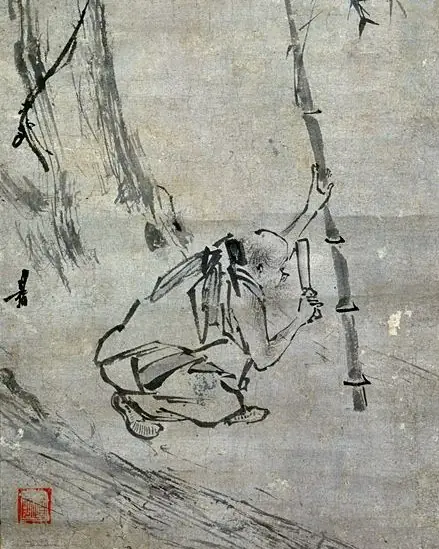
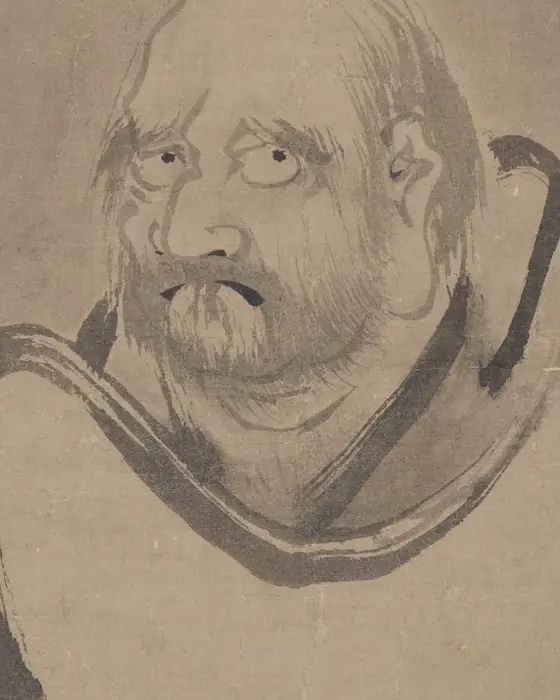
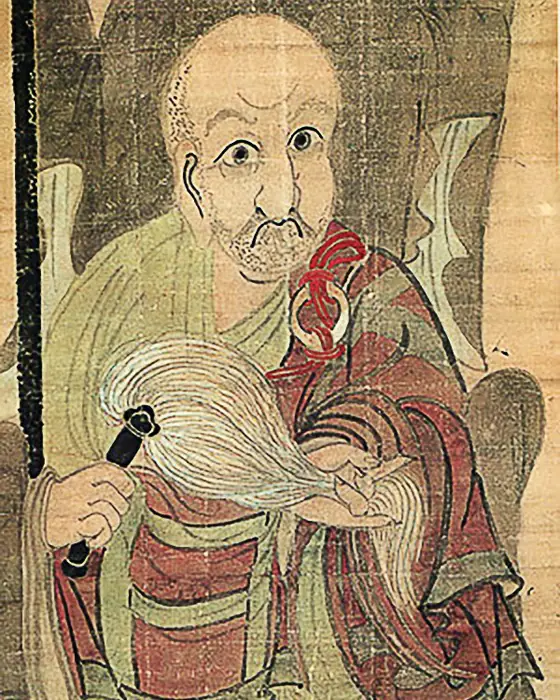
Linji's birth date is unknown; he came from Caozhou in Shandong and became a monk young, studying the scriptures before turning to Chan.
According to his Record, he studied under the master Huangbo. Three times he asked about the essential meaning of the Buddha's teaching, and three times Huangbo struck him. Sent to another teacher, Dayu, he suddenly understood, exclaiming that there was not much to Huangbo's teaching after all.
He later taught at a small temple called Linji, 'overlooking the ford', in Hebei, under the protection of a regional military governor. He died in 866.
The world they lived in
In 845 the Tang emperor Wuzong launched a great persecution of Buddhism, destroying thousands of monasteries. Chan, less dependent on great institutions, survived better than the scholarly schools and spread in the regions.
Their contribution
He taught that there is nothing to seek outside: the 'true person of no rank' is always coming in and out through the face. His shouts, blows and startling words were meant to cut through reliance on scripture, teachers and even the idea of Buddha.
Teachings and works
Linji lu (The Record of Linji)
His recorded sayings, compiled by disciples; the standard edition dates from 1120.
Related teachings
Their legacy
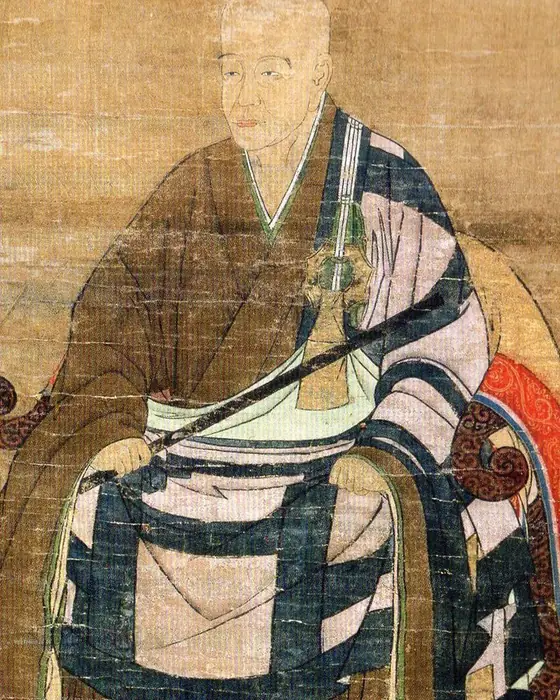
His lineage flourished in the Song dynasty and was carried to Japan by Eisai and later teachers, becoming Rinzai Zen, revived in the 18th century by Hakuin. Kōan practice in the Rinzai tradition descends from his school.
History and tradition
What history can establish
His death date is recorded, and the core of his Record probably reflects his teaching, though it was edited over two and a half centuries.
What Buddhist tradition remembers
His most quoted line, 'If you meet the Buddha, kill the Buddha', is understood in Zen as a warning against clinging even to the highest ideals, not as a call to violence.