Their story
The earliest mention of Bodhidharma, in a description of the temples of Luoyang written in 547, tells of an old monk from Persia who praised the great pagoda of the Yongning temple. It is not certain this is the same person.
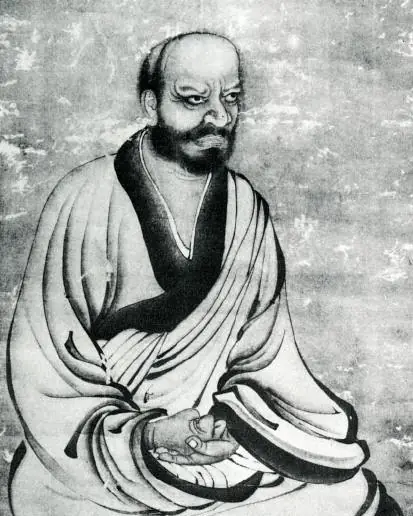
A preface by his student Tanlin, and a biography by the historian Daoxuan written in 645, describe a South Indian brahmin who came to China by sea, went north to the kingdom of the Wei, and taught a small group of disciples, above all Huike. He taught 'wall-gazing' meditation and a short teaching on 'two entrances' to the path, by principle and by practice.
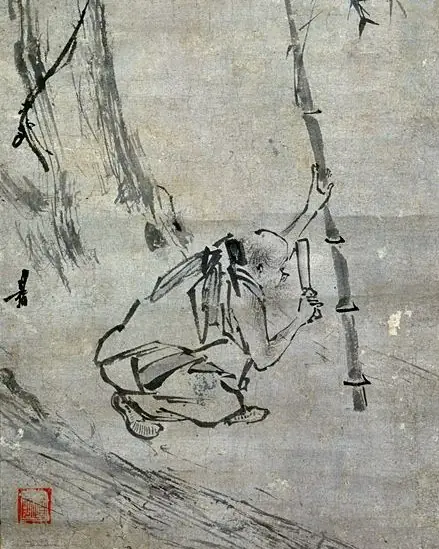
Everything else in his famous story comes from later centuries: the meeting with Emperor Wu of Liang, crossing the Yangzi on a reed, nine years facing a wall at the Shaolin monastery, Huike cutting off his arm to show his sincerity, and Bodhidharma returning westwards carrying one sandal after his death.
The world they lived in
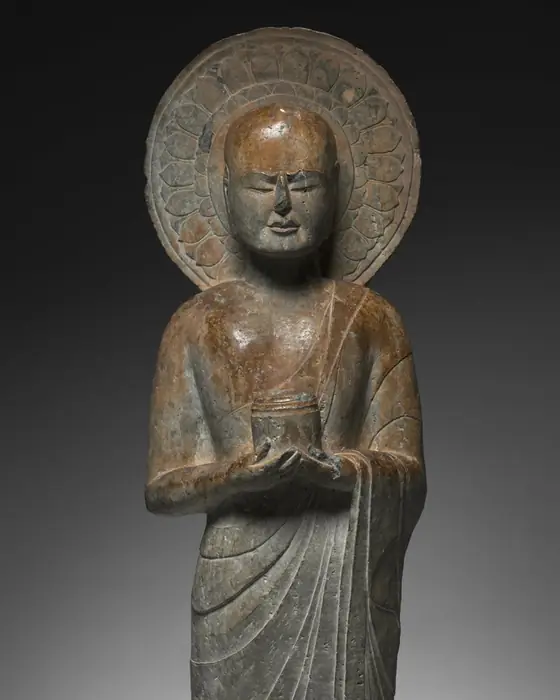
Northern China in the early 6th century had rich Buddhist establishments, great temples and scholarly lecturers on the sūtras. A few meditation teachers stood apart from this world, and later Chan looked back to them as its forerunners.
Their contribution
Historically, he taught meditation and a direct approach to the Buddha-nature within. As Chan developed in the 7th and 8th centuries, his figure became the symbol of a 'special transmission outside the scriptures, not relying on words'.
Teachings and works
The Two Entrances and Four Practices (Erru sixing lun)
The only teaching widely thought to preserve his words, recorded by his students. Many other texts were later attributed to him.
Related teachings
Their legacy
He is revered as the first Chinese ancestor of Chan, Seon and Zen. In Japan the round, limbless Daruma doll, painted with one eye when a wish is made and the other when it is fulfilled, grew from his image of unshakeable meditation. Legends linking him to Shaolin martial arts date from the 17th century.
History and tradition
What history can establish
Historians accept that a meditation teacher named Bodhidharma probably lived in northern China in the late 5th or early 6th century, but almost nothing about him can be confirmed. Even his origin is uncertain: the earliest source says Persia, later ones South India.
What Buddhist tradition remembers
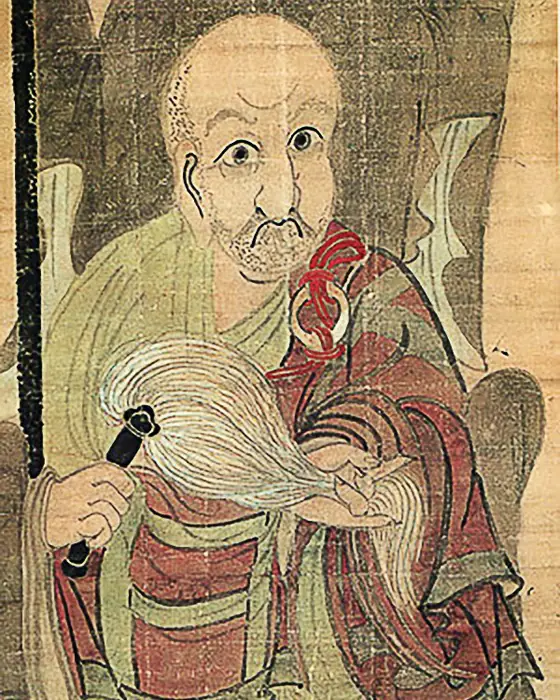
Chan tradition makes him the twenty-eighth Indian ancestor in a line from Mahākassapa. In the Song-dynasty story, when Emperor Wu listed his good works and asked what merit he had earned, Bodhidharma answered: 'No merit at all.'