Their story
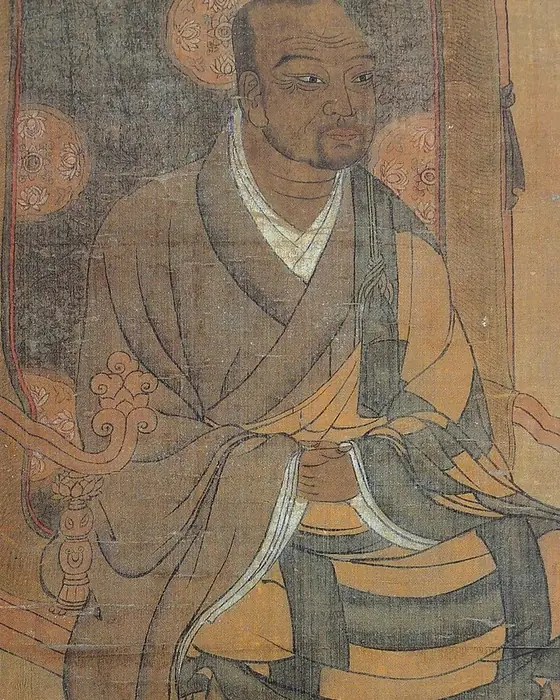
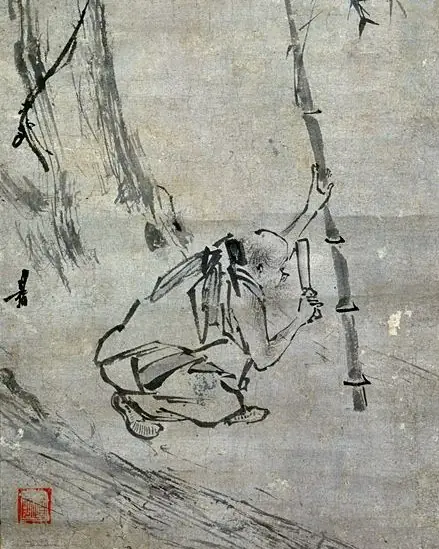
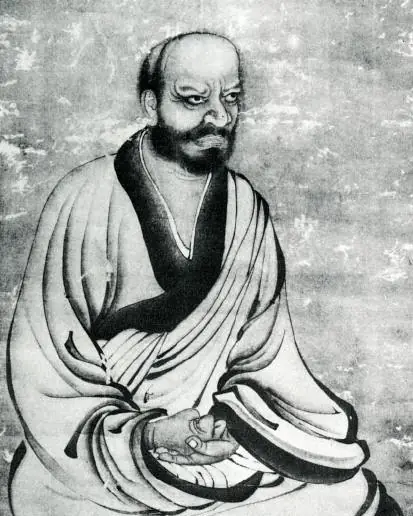
Jinul was born in 1158 near the Goryeo capital and ordained at the age of eight. In 1182 he passed the state examination for monks, but, disturbed by the worldliness of the monastic establishment, he refused a career and resolved with a few friends to form a retreat community devoted to meditation and wisdom.
He had three decisive experiences, each through reading: the Platform Sūtra of Huineng, the commentary on the Avataṃsaka Sūtra by the Chinese layman Li Tongxuan, which convinced him that Seon and the scriptures teach the same truth, and the Records of the Chinese master Dahui, which introduced him to meditation on a hwadu, a key phrase of a kōan.
In 1200 he moved his community to Mount Songgwang, where the king renamed the monastery Suseon-sa, 'the Society for Cultivating Seon'. He taught there until his death in 1210.
The world they lived in
Goryeo Buddhism was wealthy and closely tied to the aristocracy and the court, and bitterly divided between the Seon lineages and the doctrinal schools. In 1170 a military coup had overturned the civilian government.
Their contribution
He taught that one must first awaken suddenly to one's own true nature and then gradually cultivate that insight until habits are purified, and he introduced hwadu meditation to Korea, while insisting that study of the scriptures supports practice.
Teachings and works
Encouragement to Practice (Gwonsu jeonghye gyeolsa mun)
Written in 1190 for his retreat community.
Secrets on Cultivating the Mind (Susim gyeol)
Excerpts from the Dharma Collection with Personal Notes (Beopjip byeolhaeng nok jeoryo)
His major work.
Related teachings
Their legacy
Songgwang-sa became one of Korea's three 'jewel' monasteries, honoured as the jewel of the Sangha, and produced sixteen national teachers. His synthesis of meditation and study remains the basis of monastic training in the Jogye Order.
History and tradition
What history can establish
His life is well documented by a memorial inscription written soon after his death, and his works survive.
What Buddhist tradition remembers
Tradition holds that he died while seated in the lecture hall, answering students' questions, after announcing that his time had come.