Their story
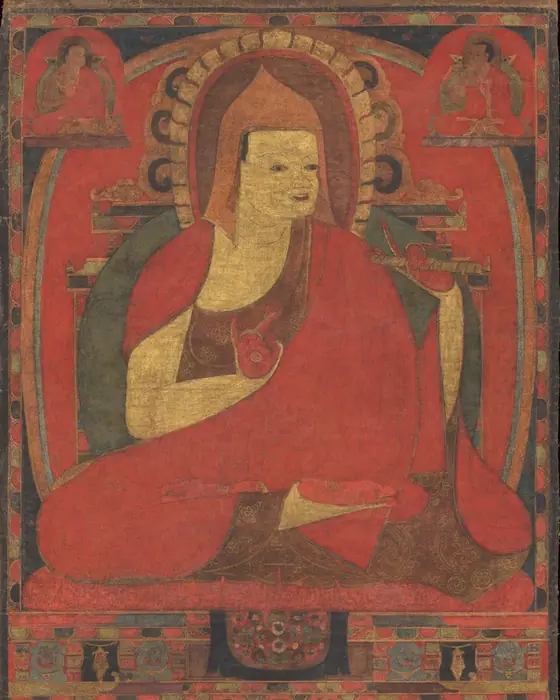
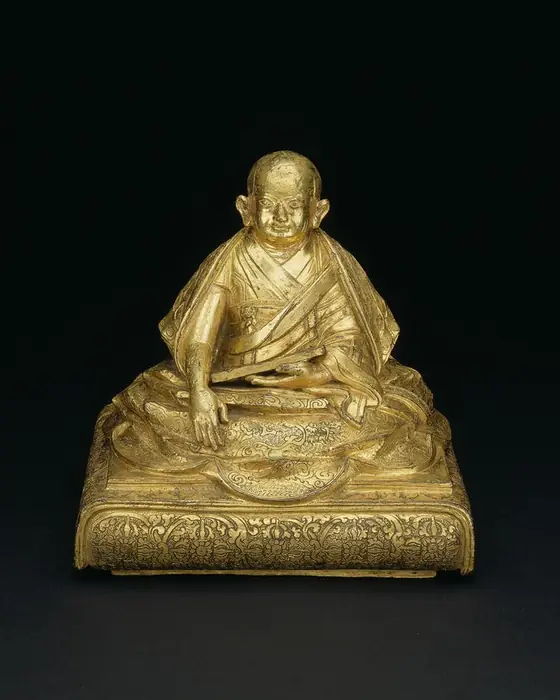
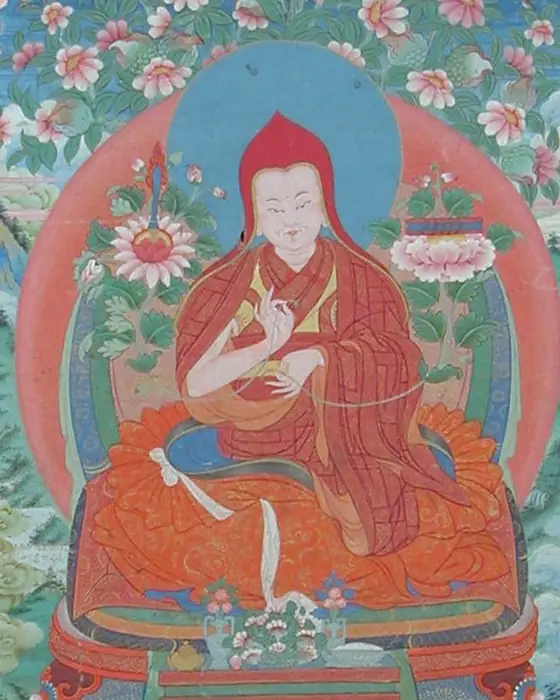
Tsongkhapa was born in 1357 in Tsongkha, in the far north-eastern region of Amdo, and was sent as a youth to central Tibet to study. He learned with teachers of every school, especially the Sakya scholar Rendawa, and mastered philosophy, discipline and tantra.
Through years of study and retreat, and visions of the bodhisattva Mañjuśrī, he came to his distinctive understanding of Madhyamaka, following Candrakīrti. In 1402 he completed his Great Treatise on the Stages of the Path, building on Atiśa's Lamp for the Path.
In 1409 he founded the Great Prayer Festival in Lhasa and the monastery of Ganden. His disciples founded Drepung in 1416 and Sera in 1419, the year of his death.
The world they lived in
Tibet in the late 14th century was ruled by the Phagmodrupa dynasty. Many felt that monastic discipline had grown lax and that tantric practice had become detached from ethics and study.
Their contribution
He insisted on strict monastic discipline, rigorous philosophical study and a clear integration of sūtra and tantra, and gave a reading of emptiness that holds conventional reality and moral causation fully valid.
Teachings and works
Great Treatise on the Stages of the Path to Enlightenment (Lam rim chen mo)
Great Treatise on the Stages of Mantra (sNgags rim chen mo)
Essence of Eloquence (Legs bshad snying po)
Ocean of Reasoning
His commentary on Nāgārjuna's Fundamental Verses.
Related teachings
Their legacy
The Gelug school, headed later by the Dalai Lamas and Panchen Lamas, spread across Tibet, Mongolia and beyond. Ganden, Drepung and Sera became the largest monasteries in the world, re-founded in India after 1959.
History and tradition
What history can establish
His life is extensively documented by his disciples, and his works survive in full.
What Buddhist tradition remembers
Gelug tradition regards him as an emanation of Mañjuśrī and celebrates the anniversary of his death with the festival of lights, Ganden Ngamchö.