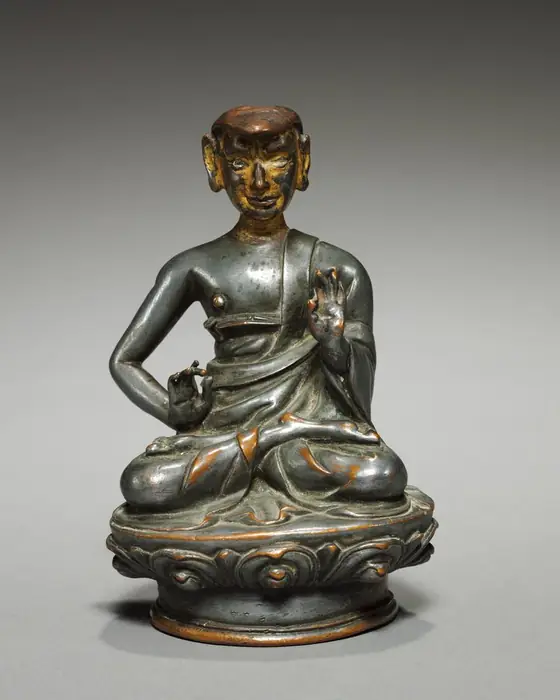
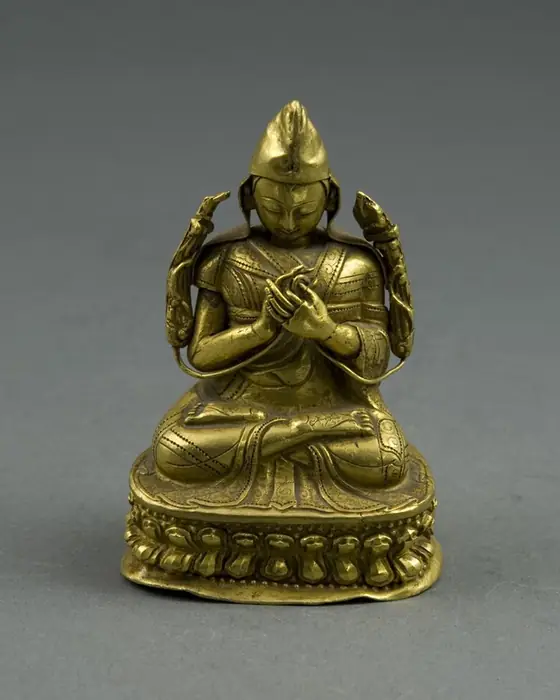
Their story
Kunga Gyaltsen was born in 1182 into the Khön family, hereditary heads of Sakya monastery, and studied with his uncle Drakpa Gyaltsen. From 1204 he studied with the Kashmiri scholar Śākyaśrībhadra, mastering the Indian sciences, including logic, grammar and poetics.
His Treasury of Reasoning presented Dharmakīrti's epistemology with new rigour, and his Clarifying the Three Vows criticised practices he thought had strayed from Indian authority. His Elegant Sayings became beloved throughout Tibet.
In 1244 the Mongol prince Köden summoned him. He arrived at Liangzhou in 1247 and negotiated the submission of Tibet to the Mongols, writing to Tibetan leaders to accept their rule. He died at Liangzhou in 1251.
The world they lived in
The Mongol empire was expanding across Asia; Tibet, divided among monasteries and local lords, had no central government able to resist. Tibetan religious leaders became intermediaries with the Mongol court.
Their contribution
He set standards of scholarship for Tibet and, politically, laid the foundation of the 'patron and priest' relationship in which Tibetan lamas served as teachers to Mongol rulers.
Teachings and works
Treasury of Reasoning (Tshad ma rigs gter)
Clarifying the Three Vows (sDom gsum rab dbye)
Elegant Sayings of Sakya (Sa skya legs bshad)
The Entrance Gate for the Wise (mKhas pa 'jug pa'i sgo)
Related teachings
Their legacy
His nephew Phagpa became the imperial preceptor of Kublai Khan, and the Sakya lamas governed Tibet under Mongol patronage for nearly a century. Sakya honours him as one of its five founding masters.
History and tradition
What history can establish
His life, works and Mongol mission are well documented in Tibetan and other sources.
What Buddhist tradition remembers
Sakya tradition regards him as an emanation of Mañjuśrī, the bodhisattva of wisdom.