Their story
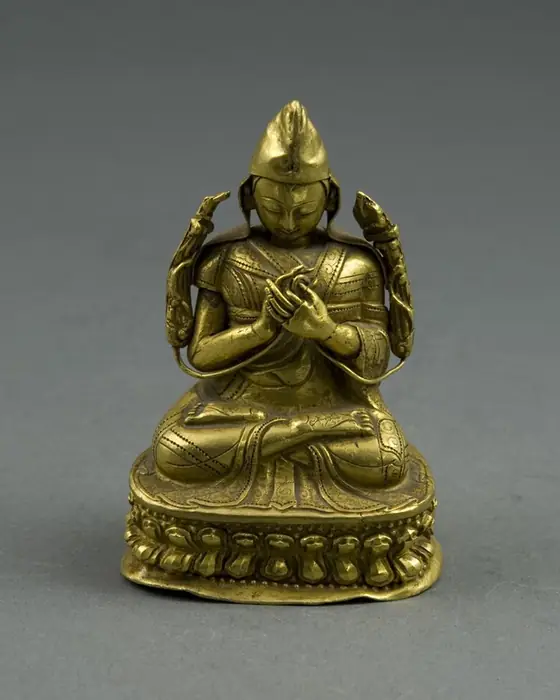
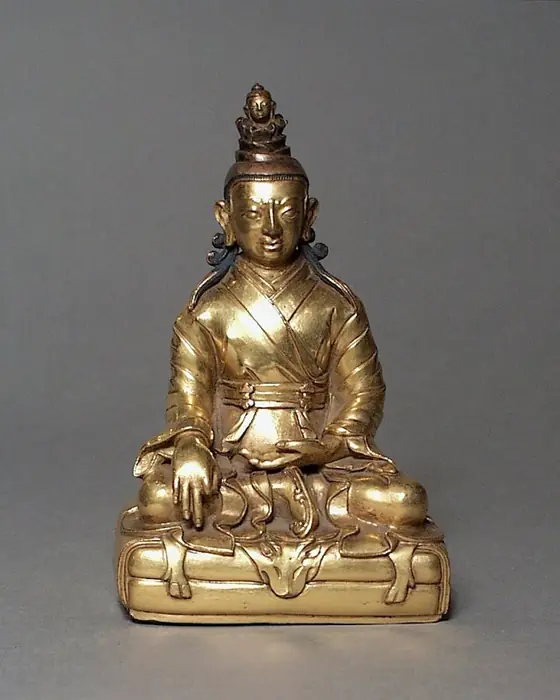
Ngawang Lobsang Gyatso was born in 1617 into a noble family and recognised as the reincarnation of the Fourth Dalai Lama. He was raised at Drepung, the great Gelug monastery near Lhasa.
Tibet was torn by war between rival rulers and religious schools. In 1642 the Mongol leader Gushri Khan, an ally of the Gelug, defeated their enemies and gave authority over Tibet to the Dalai Lama, founding the government known as the Ganden Phodrang.
In 1645 he began building the Potala Palace on the site associated with Songtsen Gampo. He visited the Qing emperor in Beijing in 1652–53, wrote history, poetry and a remarkable autobiography, and practised Nyingma as well as Gelug teachings. He died in 1682; his regent kept his death secret for about fifteen years.
The world they lived in
The 17th century saw the rise of the Qing dynasty in China and competing Mongol powers, each seeking the prestige of Tibetan Buddhism. Inside Tibet, the Gelug competed with the Karma Kagyu and their patrons.
Their contribution
He unified Tibet under a Buddhist government, gave the Dalai Lamas their political role and presented them as emanations of Avalokiteśvara in continuity with the ancient kings.
Teachings and works
A History of Tibet (The Song of the Queen of Spring)
Written in 1643.
His autobiography and his record of secret visions
Related teachings
Their legacy
The government he founded lasted until 1959, and every later Dalai Lama lived in his Potala. Tibetans still call him 'the Great Fifth'.
History and tradition
What history can establish
His life is extremely well documented, not least in his own writings and in Chinese and European records.
What Buddhist tradition remembers
Tradition regards the Dalai Lamas as emanations of Avalokiteśvara, the bodhisattva of compassion, a claim he made central to the institution.