Their story
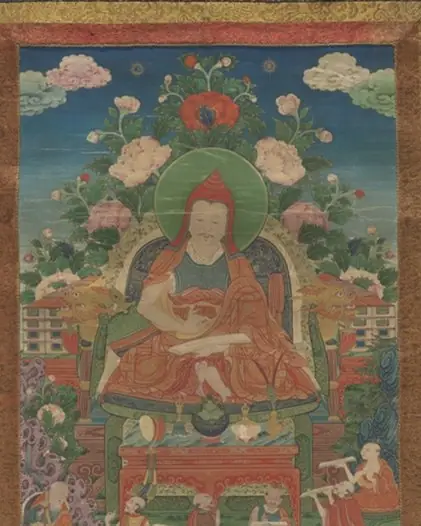
Dharmakīrti is usually dated to the 6th or 7th century CE. Tibetan tradition says he was born to a brahmin family in South India, mastered brahmin philosophy, and then became a Buddhist monk at Nālandā.
Wanting to master Dignāga's system, tradition says, he studied under a pupil of Dignāga's pupil and soon surpassed his teacher, who allowed him to write a commentary. The result, the Pramāṇavārttika, became far more than a commentary: a full system of Buddhist epistemology, logic and philosophy of mind.
Later accounts tell of his debating victories over Hindu and Jain philosophers, and of his disappointment that few could understand his work.
The world they lived in
In the 7th century Indian philosophy was a battleground of rival schools, above all Buddhist and Brahmanical, arguing about the self, God, the authority of the Vedas and the nature of perception.
Their contribution
He argued that only momentary particulars are ultimately real, that perception is free of concepts, and that inference is reliable because it rests on real relations of cause and identity. He used this system to defend Buddhist teachings, including rebirth and the Buddha's reliability, by reason alone.
Teachings and works
Pramāṇavārttika (Commentary on Valid Knowledge)
His masterpiece.
Pramāṇaviniścaya (Ascertainment of Valid Knowledge)
Nyāyabindu (Drop of Reasoning)
A short introductory summary.
Santānāntarasiddhi (Proof of Other Minds)
Related teachings
Their legacy
After him, nearly every Indian philosopher had to answer his arguments. In Tibet, his logic became the training ground of monastic debate, practised daily in the courtyards of the great monasteries.
History and tradition
What history can establish
His works survive, several in Sanskrit, and are securely his. His biography is known only from Tibetan histories written many centuries later.
What Buddhist tradition remembers
A story tells that his rivals tied his great work to the tail of a dog, to scatter it through the streets, and that he predicted it would nonetheless spread through the world, as it did.