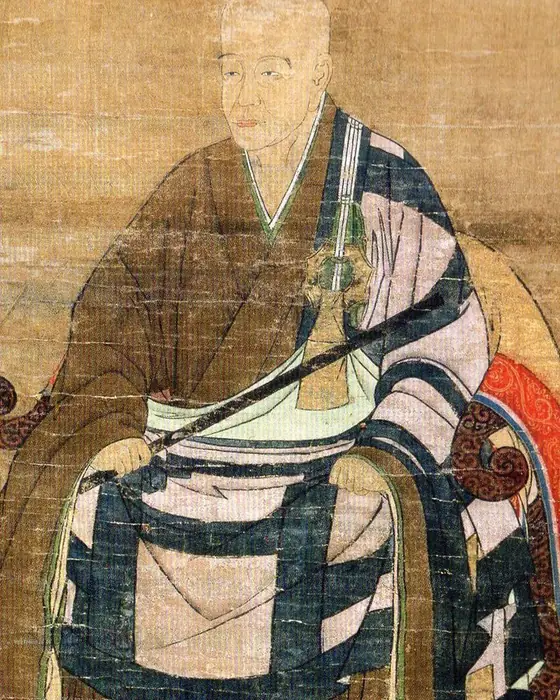
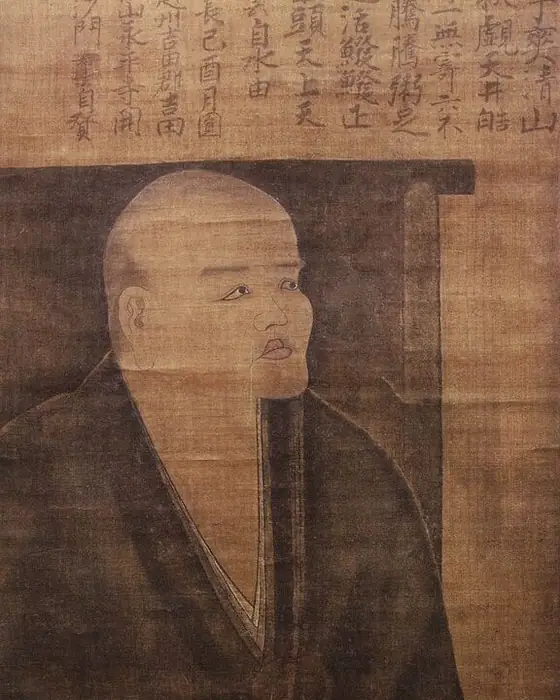
Their story
Mugai Nyodai lived from about 1223 to 1298. She studied Zen with Mugaku Sogen (Wuxue Zuyuan), a Chinese master who came to Japan in 1279 at the invitation of the shogunate, and received his dharma transmission.
She founded the convent of Keiai-ji in Kyoto, which, with her patronage network among warrior families, became a leading institution for women practitioners.
After her death, Keiai-ji headed the system of 'five mountain' convents that paralleled the great official Zen monasteries for men. A 14th-century portrait sculpture of her survives in Kyoto.
The world they lived in
In Kamakura Japan, women of warrior families often became nuns, especially when widowed, and Zen was the favoured Buddhism of the shogunate. Chinese masters were teaching in Kamakura and Kyoto.
Their contribution
She established a lineage and institution through which women could practise and teach Zen at the highest level for generations.
Their legacy
Keiai-ji itself did not survive, but its lineage passed to other Kyoto convents, and she is honoured today as a founder of women's Zen in Japan.
History and tradition
What history can establish
Her dharma transmission and founding of Keiai-ji are supported by documents, but many details of her identity are debated. She was later identified with Chiyono, heroine of a well-known Zen story, and scholars disagree about whether they were the same woman.
What Buddhist tradition remembers
The Chiyono story tells that she awoke to reality when the bottom of her old bucket broke, the water spilled out, and the moon's reflection vanished.