Their story
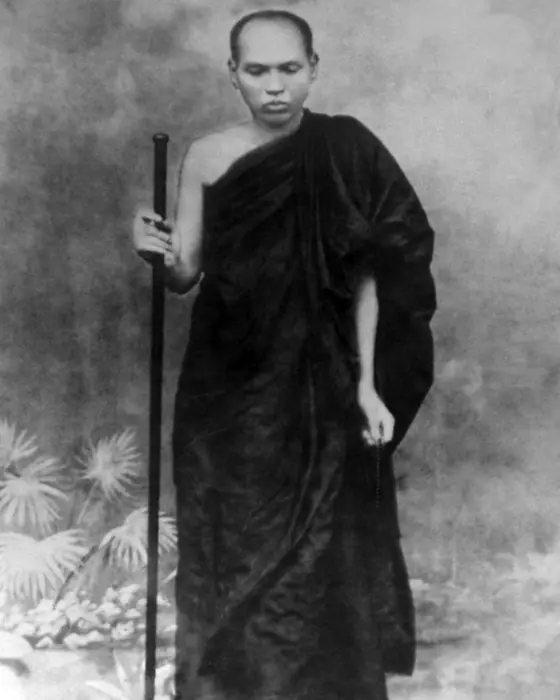
Mahasi Sayadaw was born in 1904 in Upper Burma, became a novice at twelve and a monk in 1923, and became a respected Pāli scholar.
In 1932 he practised under the meditation master Mingun Jetavana Sayadaw, learning a method of close attention to bodily and mental events. He began teaching at his home monastery, the Mahasi ('great drum') monastery, from which he took his name.
In 1949 the prime minister, U Nu, invited him to lead a new meditation centre in Yangon. At the Sixth Buddhist Council of 1954–56 he served as the monk who put the questions for the recitation of the canon. He died in 1982.
The world they lived in
Newly independent Burma saw meditation as part of national and religious renewal, and the government supported mass lay meditation centres.
Their contribution
He taught a practical method, beginning with noting the rising and falling of the abdomen, that allowed lay people to practise intensive insight meditation in short retreats, and explained it in detailed manuals.
Teachings and works
Manual of Insight
His major work on insight meditation, in Burmese; English translation published 2016.
Related teachings
Their legacy
Centres following his method opened across Asia and the West. Teachers who trained in his lineage, such as Anagārika Munindra, Dipa Ma and their Western students, founded the insight meditation movement in the United States and Europe.
History and tradition
What history can establish
His life is fully documented.