Their story
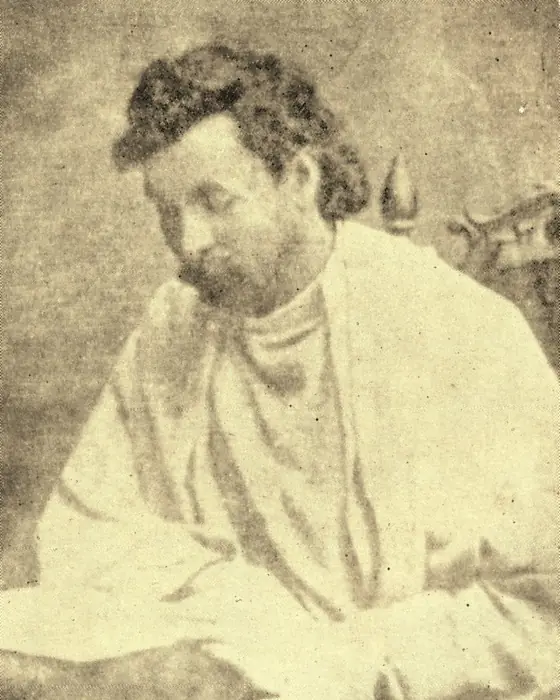
Bhimrao Ambedkar was born in 1891 into a Mahar family, a community treated as 'untouchable' under the caste system. Despite discrimination, he earned doctorates from Columbia University and the London School of Economics and qualified as a barrister.
He led campaigns against untouchability and, in 1935, declared that although he had been born a Hindu, he would not die one. After independence he chaired the committee that drafted the Constitution of India and served as the country's first law minister.
After years of studying Buddhism, he converted at Nagpur on 14 October 1956, receiving the refuges from the monk Chandramani, and then administered them to hundreds of thousands of followers, with twenty-two vows rejecting caste and Hindu practices. He died seven weeks later, on 6 December 1956.
The world they lived in
India was winning independence from Britain. Caste discrimination remained deeply entrenched, and Ambedkar searched for a religion that affirmed equality and reason.
Their contribution
He reinterpreted Buddhism as a rational, ethical and social teaching of liberation from injustice as well as suffering, and gave millions of Dalits a new religious identity.
Teachings and works
The Buddha and His Dhamma
Published in 1957, after his death.
Annihilation of Caste
1936.
Related teachings
Their legacy
The Ambedkarite Buddhist movement, sometimes called Navayana, 'the new vehicle', is the largest part of India's Buddhist population today. He is revered as 'Babasaheb' by millions, and the day of his conversion is celebrated each year at Nagpur.
History and tradition
What history can establish
His life is fully documented.