Their story
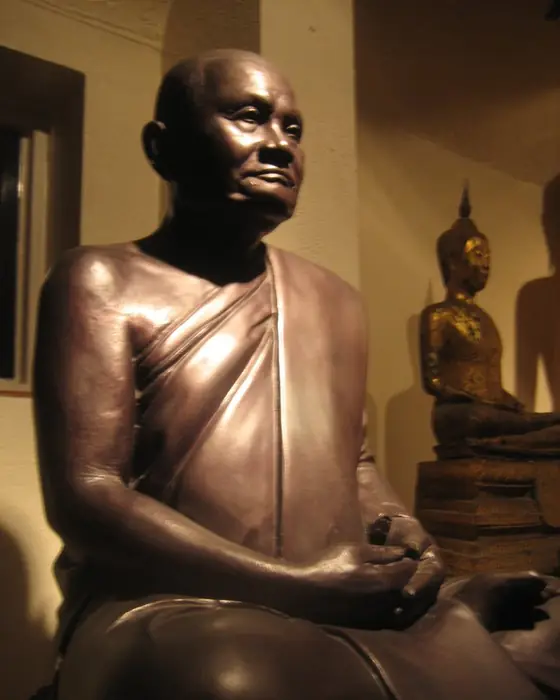
Buddhadāsa was born in 1906 in Chaiya, in southern Thailand, and ordained in 1926. He studied in Bangkok but was disappointed by the formal, exam-centred education of the monasteries.
In 1932 he returned home and founded Suan Mokkh, 'the Garden of Liberation', a forest monastery where he studied the Pāli texts directly and taught in simple language. He took the name Buddhadāsa, 'servant of the Buddha'.
For six decades he wrote and lectured prolifically, developing a distinctive teaching and holding dialogues with Christians and others. He founded an international retreat centre in 1989 and died in 1993.
The world they lived in
20th-century Thailand was modernising and centralising, with a state-controlled monastic hierarchy. Many educated Thais found traditional religion out of step with modern life.
Their contribution
He distinguished 'everyday language' from 'Dhamma language', reading teachings about rebirth and heaven as referring to states of mind in this life, and made non-self and emptiness the heart of practice. He also developed ideas of 'Dhammic socialism'.
Teachings and works
Handbook for Mankind
Talks on the core of Buddhism.
Heartwood of the Bodhi Tree
Related teachings
Their legacy
Suan Mokkh remains an important retreat centre, and his ideas influenced Thai social critics and engaged Buddhists, as well as meditators worldwide.
History and tradition
What history can establish
His life is fully documented.