Their story
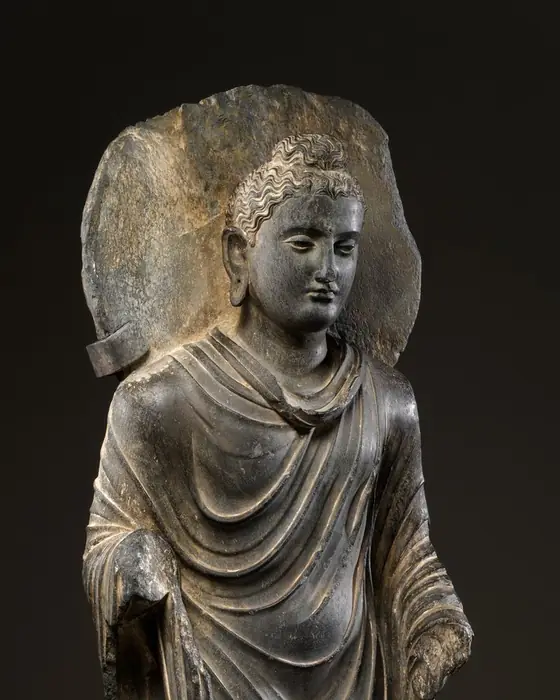
The Aṅgulimāla Sutta tells of a feared bandit in the kingdom of Kosala who killed travellers and wore a garland of their fingers, the meaning of his name. One day the Buddha walked alone along his road. Aṅgulimāla ran after him but, however hard he ran, could not catch up with the Buddha walking calmly ahead.
'Stop, monk!' he shouted. The Buddha replied, 'I have stopped, Aṅgulimāla. You stop too,' explaining that he had stopped harming living beings. Aṅgulimāla threw away his weapons and asked to be ordained.
As a monk, the sutta says, he was struck with stones and sticks by people who remembered his crimes, and the Buddha told him to bear it as the result of his past deeds. He reached awakening. The same text tells how he helped a woman in a difficult childbirth by a solemn declaration of truth.
The world they lived in
The forests of Kosala were dangerous, and kings struggled to keep roads safe. In the sutta, King Pasenadi is setting out with soldiers to hunt Aṅgulimāla down when he finds him already a monk.
Their contribution
His story made concrete the Buddhist teaching that a person is defined by their present actions, and that the path is open to anyone willing to stop.
Teachings and works
With Aṅgulimāla (Aṅgulimāla Sutta, MN 86)
The Aṅgulimāla Paritta
His declaration of truth, still chanted as a blessing for safe childbirth.
Related teachings
Their legacy
The Aṅgulimāla Paritta is still chanted in Theravāda countries for women in childbirth, and in Britain the Buddhist prison chaplaincy takes its name from him, as a sign that anyone can change.
History and tradition
What history can establish
Known only from Buddhist texts. The sutta itself is early; later commentaries added the backstory that a jealous teacher had set him the task of collecting a thousand fingers.
What Buddhist tradition remembers
Later tradition makes him a brilliant student, originally named Ahiṃsaka, 'Harmless', led into violence by his teacher's cruelty, which turns his story into one of both guilt and victimhood.