Their story
The chronicles say Tissa came to the throne of Anuradhapura as a friend of Ashoka, though the two never met, and that after an exchange of gifts he took the title Devānaṃpiya, 'Beloved of the Gods', which Ashoka himself used.
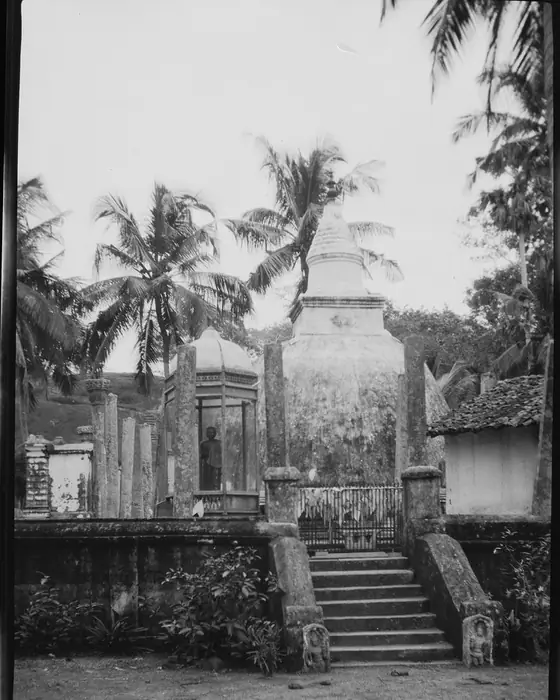
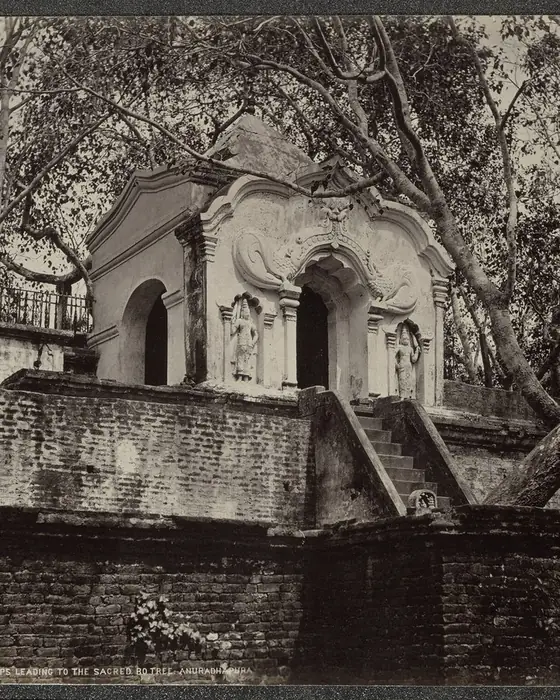
According to the Mahāvaṃsa, he met Mahinda while hunting at Mihintale, was converted, and gave the Mahāmegha park at Anuradhapura for the monastery that became the Mahāvihāra. He planted the Bodhi tree branch brought by Saṅghamittā and, the chronicles say, built the Thūpārāma, the island's first stupa, to hold a relic of the Buddha.
Tradition also credits him with building reservoirs, including the Tissa Wewa, part of the irrigation on which Anuradhapura depended.
The world they lived in
Anuradhapura was the capital of a growing kingdom in the island's dry north, dependent on irrigation and on its links with India. Adopting Buddhism tied its rulers to the prestige of the Maurya court.
Their contribution
The chronicles credit him with founding the Mahāvihāra, whose tradition became Theravāda orthodoxy, and with the first great Buddhist monuments of Sri Lanka.
Their legacy
Sri Lankan kings for two thousand years presented themselves as protectors of the Buddha's teaching in his image, and the partnership he is said to have formed between king and monastic community shaped the island's history.
History and tradition
What history can establish
His reign is known almost entirely from the chronicles, and its dates are uncertain. The title he bears, Devānaṃpiya, is the one Ashoka uses in his inscriptions.
What Buddhist tradition remembers
The chronicles present his conversion as destined: the Buddha himself had visited the island and foreseen it.