Their story
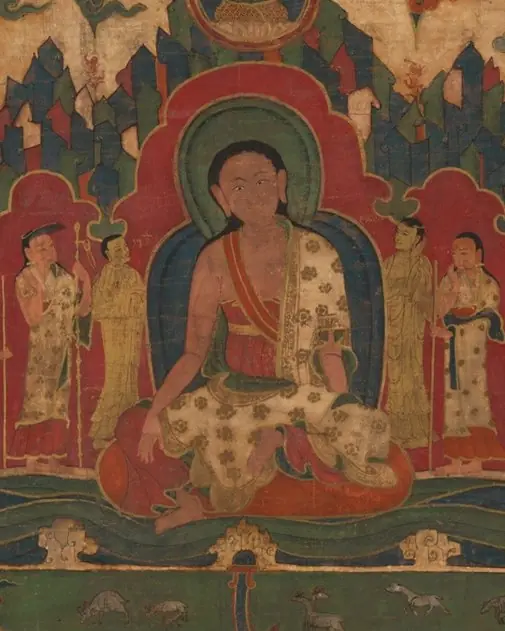
According to her biographies, Machig was born around 1055 in southern Tibet and as a child was famous for reading the Perfection of Wisdom sūtras aloud with astonishing speed, earning a living by reciting them for patrons.
Her teachers included the Indian master Padampa Sangye. She married, or lived as the consort of, an Indian yogin, Töpa Bhadra, and had children, a choice that scandalised some of her contemporaries.
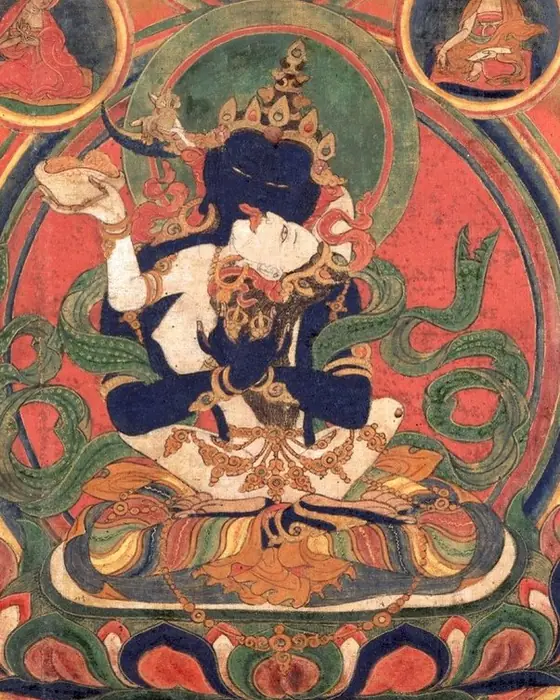
She developed Chöd: a meditation in which the practitioner, often in a charnel ground or wild place, visualises offering their own body as food to demons and all beings, cutting attachment to the self. She taught at Zangri Kharmar for decades and died, tradition says, at ninety-five.
The world they lived in
The late 11th century was the time of the 'later transmission', when new lineages were forming around charismatic teachers. The Perfection of Wisdom teaching on emptiness was widely studied.
Their contribution
She turned the philosophy of emptiness into a vivid, embodied practice open to lay people and wandering yogis as well as monks, and created a lineage that combined Indian sources with Tibetan innovation.
Teachings and works
Teachings on Chöd
Recorded in texts attributed to her and her students.
Related teachings
Their legacy
Chöd is practised in every Tibetan school, often with a hand drum and thighbone trumpet, and she is venerated as an emanation of the Great Mother, the Perfection of Wisdom.
History and tradition
What history can establish
Machig was a historical teacher, and texts attributed to her survive, but her biographies were written later and her dates vary between sources.
What Buddhist tradition remembers
Tradition says Indian scholars came to Tibet to test her, and that her teaching was the first Buddhist teaching to travel from Tibet to India rather than the other way.