Their story
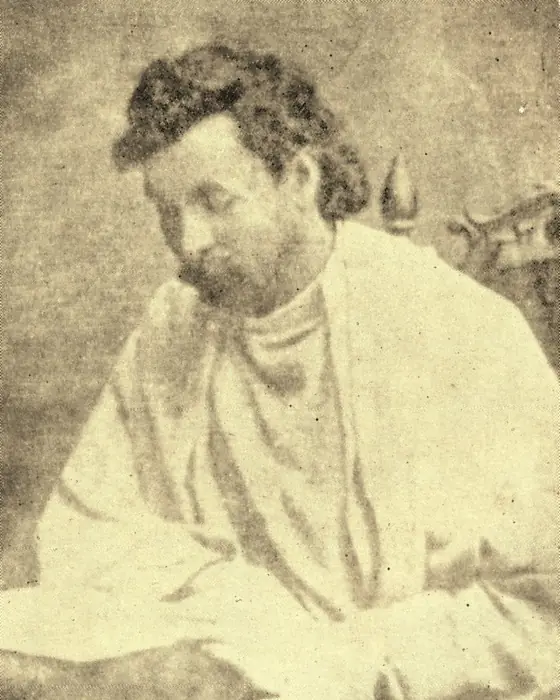
Suzuki was born in 1870 in Kanazawa and practised Zen at Engaku-ji in Kamakura under Imakita Kōsen and then Shaku Sōen, receiving the name Daisetsu.
In 1893 he helped translate Shaku Sōen's speech for the World's Parliament of Religions in Chicago. From 1897 to 1908 he lived in La Salle, Illinois, working with the publisher Paul Carus on translations of Asian texts. In 1911 he married Beatrice Erskine Lane, an American scholar of Buddhism.
Teaching at universities in Japan, he wrote the Essays in Zen Buddhism and many other works. From 1950 he lectured in the United States, including at Columbia University, reaching a wide audience. He died in Tokyo in 1966.
The world they lived in
Meiji Japan was modernising rapidly and Japanese Buddhists were eager to present Buddhism as a universal, scientific religion to the West, where interest in Asian thought was growing.
Their contribution
He presented Zen as a direct experience of reality beyond concepts, a universal core of spirituality, making it accessible to Western readers, and translated key texts such as the Laṅkāvatāra Sūtra.
Teachings and works
Essays in Zen Buddhism
Three series, 1927–1934.
Zen and Japanese Culture
The Lankavatara Sutra (translation, 1932)
Related teachings
Their legacy
His writings shaped how the West understood Zen for much of the 20th century, influencing figures such as Carl Jung, Erich Fromm, Thomas Merton and John Cage. Scholars have since criticised his picture of Zen as idealised and nationalistic, and debated his statements during the Second World War.
History and tradition
What history can establish
His life is fully documented.