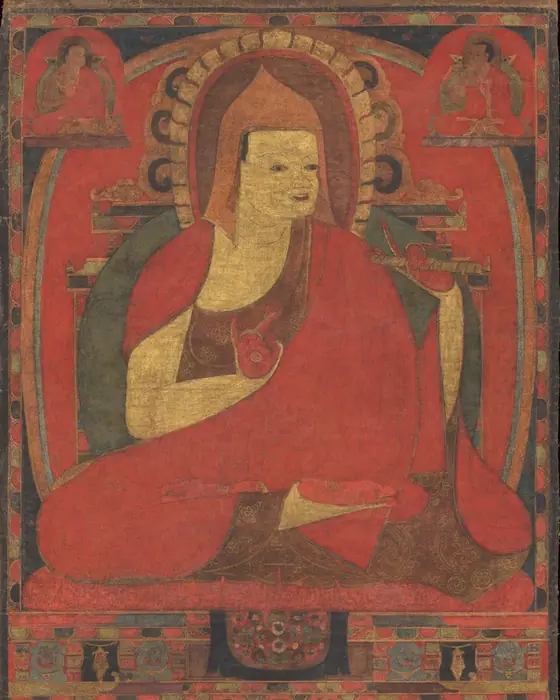
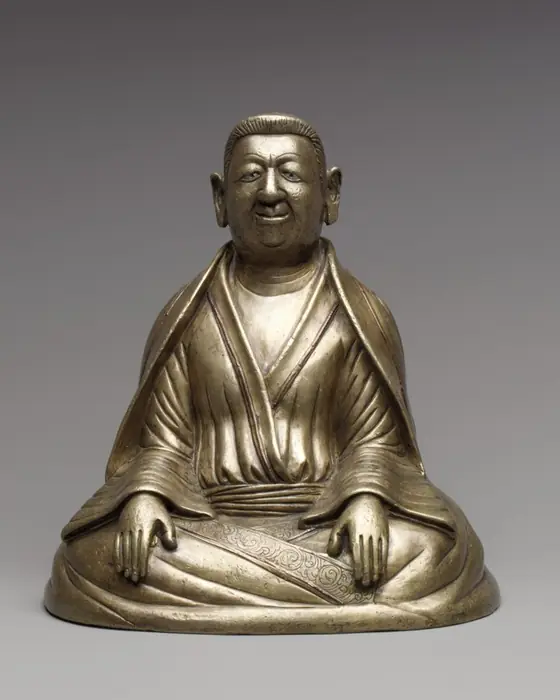
Their story
Rinchen Zangpo was born in 958 in the western Tibetan kingdom of Guge. As a young monk he was one of a group sent by the king, Yeshe Ö, to study in Kashmir; many of his companions died of the heat and illness, but he studied for years, making at least three journeys.
Returning to Guge, he became the kingdom's great translator, working with Indian scholars to render Perfection of Wisdom commentaries, Madhyamaka works and the Yoga tantras into Tibetan, and revising older translations.
When Atiśa arrived in Guge in 1042, the elderly translator met him and, according to Atiśa's biographers, became his student. Rinchen Zangpo died in 1055, at a great age.
The world they lived in
After the collapse of the Tibetan empire in the 840s, organised Buddhism in central Tibet had declined. The rulers of Guge, descendants of the imperial line, sponsored its revival, looking to Kashmir and India for authentic teachings.
Their contribution
He set new standards of translation and brought Kashmiri artists and learning to the western Himalaya, where temples of his era survive with their paintings and sculptures.
Teachings and works
Translations of some 150 texts
Including the Tattvasaṃgraha tantra and commentaries on the Perfection of Wisdom.
Related teachings
Their legacy
Tibetans date the 'new translation' (sarma) period from his work, the basis of the Kagyu, Sakya and Gelug schools. Tradition credits him with founding 108 temples, among them Tholing, Tabo and Nyarma.
History and tradition
What history can establish
His life is known from a biography written by a disciple and from inscriptions at western Himalayan temples. The number of temples credited to him is traditional.