Their story
The Theravāda chronicles and commentaries tell that Moggaliputta Tissa was a brahmin youth of Pāṭaliputra, foreseen by the elders of the Second Council as a future protector of the teaching, who became a monk and a great teacher.
In Ashoka's reign, they say, so many self-interested men joined the now wealthy community that true monks refused for seven years to hold their communal ceremonies with them. Ashoka called Moggaliputta Tissa from retreat, and together they examined the monks and expelled those who held wrong views. He then presided over a council of a thousand monks at Pāṭaliputra, the Third Council, which recited the teaching again.
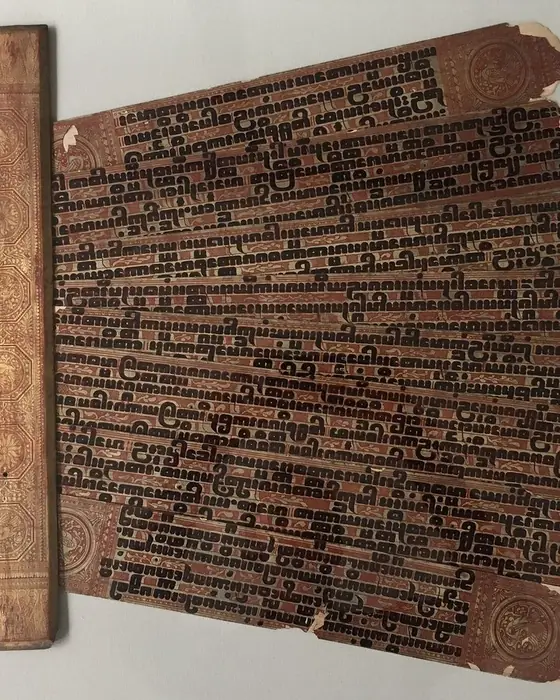
At the council, tradition says, he composed the Kathāvatthu, 'Points of Controversy', refuting the views of other schools, and afterwards sent missions to nine regions, among them Mahinda's to Sri Lanka.
The world they lived in
By Ashoka's time the Buddhist community had divided into several schools with differing views on doctrine and discipline. Royal patronage brought wealth, and with it disputes over who truly belonged.
Their contribution
Whatever the history, the Kathāvatthu attributed to him became part of the Theravāda Abhidhamma, and the tradition of the Third Council defined Theravāda as the school that had kept the original teaching.
Teachings and works
Kathāvatthu (Points of Controversy)
Traditionally attributed to him; the fifth book of the Theravāda Abhidhamma. Scholars see it as compiled over a long period.
Related teachings
Their legacy
The missions the chronicles credit to him frame the spread of Buddhism to Sri Lanka and Southeast Asia as a single, planned outreach, a story still central to how Theravāda Buddhists understand their history.
History and tradition
What history can establish
Moggaliputta Tissa appears only in Theravāda sources; other schools' accounts of Ashoka name different teachers, such as Upagupta. Ashoka's inscriptions show concern about schism but mention no council. Many historians think the Third Council, if it happened, was a Theravāda gathering rather than one of all Buddhists.
What Buddhist tradition remembers
The chronicles give his birth a divine origin, as a god persuaded to be reborn on earth to protect the teaching.