Their story
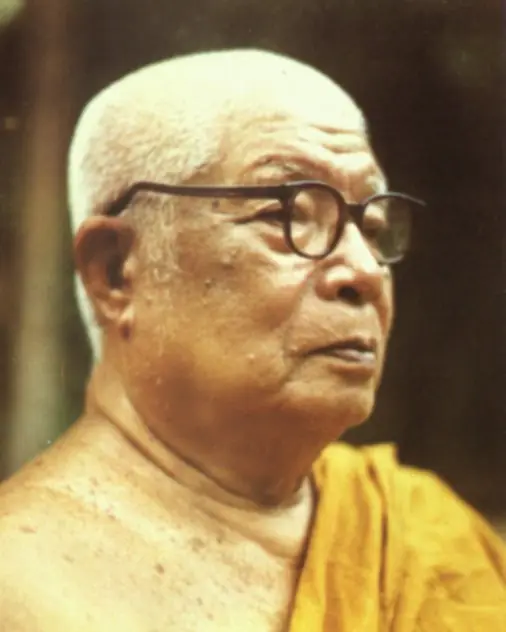
Ajahn Chah was born in 1918 in a village in north-east Thailand, spent time as a novice in childhood, and was ordained as a monk in 1939. Dissatisfied with study alone, he took up the life of a wandering forest monk, and spent a short but decisive time with the great forest master Ajahn Mun.
In 1954 he founded Wat Nong Pah Pong near his home village, a monastery of strict discipline and simple living. His teaching, earthy and humorous, attracted many followers.
From 1967 Western monks joined him, the first being the American Ajahn Sumedho. In 1975 he founded Wat Pah Nanachat, an international monastery, and in 1977 visited England, which led to the founding of monasteries there. Illness left him unable to speak from 1981 until his death in 1992.
The world they lived in
The Thai forest tradition, reviving strict practice in remote areas of the north-east, was becoming nationally famous as Thailand modernised. Westerners were beginning to seek ordination in Asia.
Their contribution
He taught a practice rooted in monastic discipline, meditation and everyday mindfulness, and in letting go, and adapted the forest tradition so that it could take root in other cultures.
Teachings and works
Talks recorded and transcribed by his students
Collected as The Collected Teachings of Ajahn Chah.
Related teachings
Their legacy
More than two hundred branch monasteries follow his lineage, including Chithurst and Amaravati in England and monasteries in Australia, New Zealand, North America and Europe.
History and tradition
What history can establish
His life is well documented by his students and monasteries.